
Promoting Spinal Health Awareness at Ho Tung Secondary School
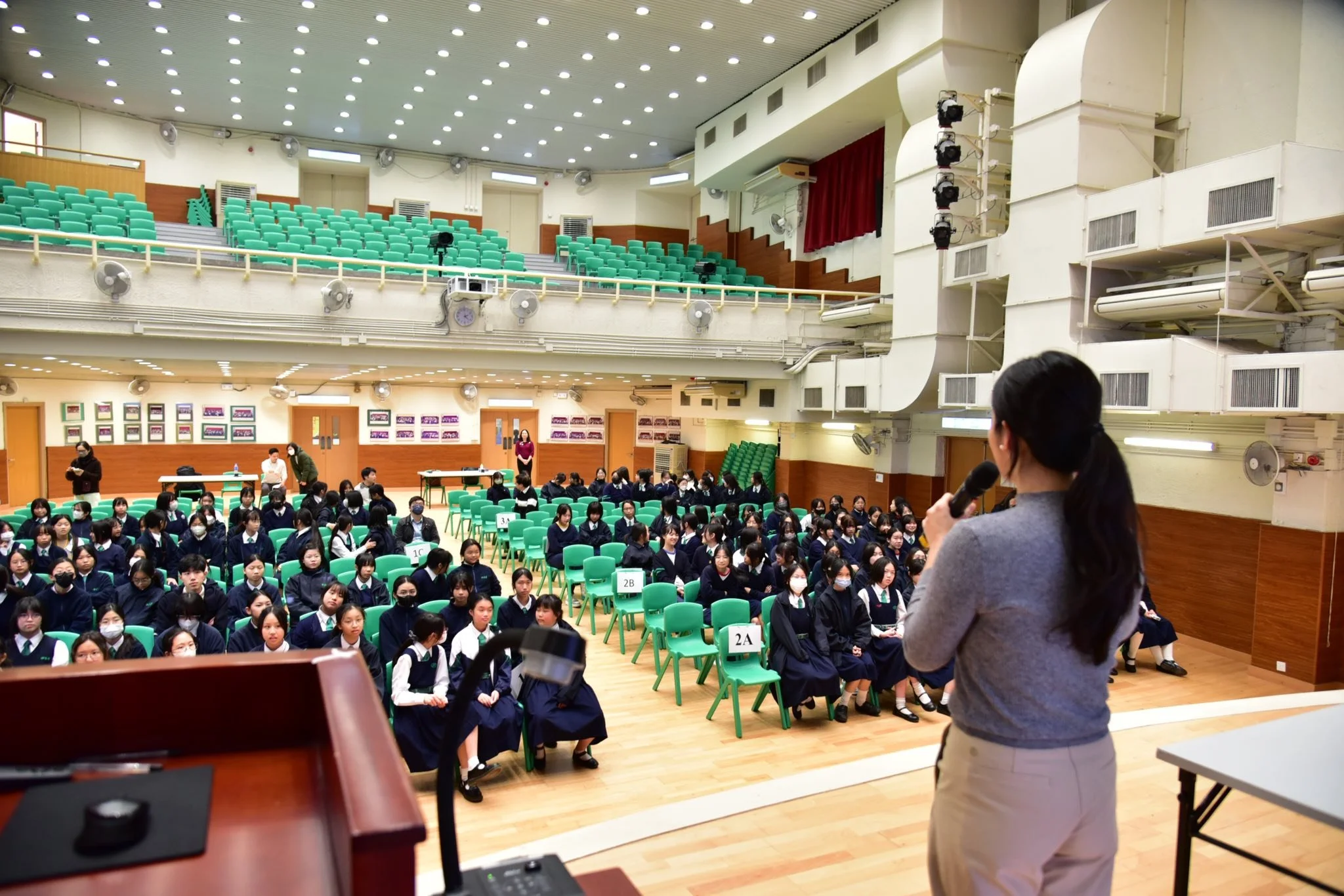
Our clinic was pleased to be invited by Ho Tung Secondary School to provide a spinal health education session for S1–S3 students. Dr Alex and Dr Crystal attended the school to share practical information on adolescent spinal health, posture awareness, backpack use, and adolescent idiopathic scoliosis.
The aim of the session was to help students better understand spinal health during the teenage growth years and raise awareness of signs that may require further assessment.
Promoting Spinal Health Awareness
Adolescence is a period of rapid growth, during which changes in posture, body alignment, or spinal symmetry may become more noticeable. During the talk, students were introduced to common signs of spinal asymmetry, including:
Uneven shoulder height
One shoulder blade appearing more prominent
Uneven waistline
The body leaning slightly to one side
One side of the back appearing higher when bending forward
These signs do not necessarily confirm a spinal condition, but they may indicate the need for further professional assessment.
The session also discussed adolescent idiopathic scoliosis, a condition that may develop during the teenage years and may not cause pain in its early stages. This is why early awareness and observation can be helpful.
Simple Spinal Screening
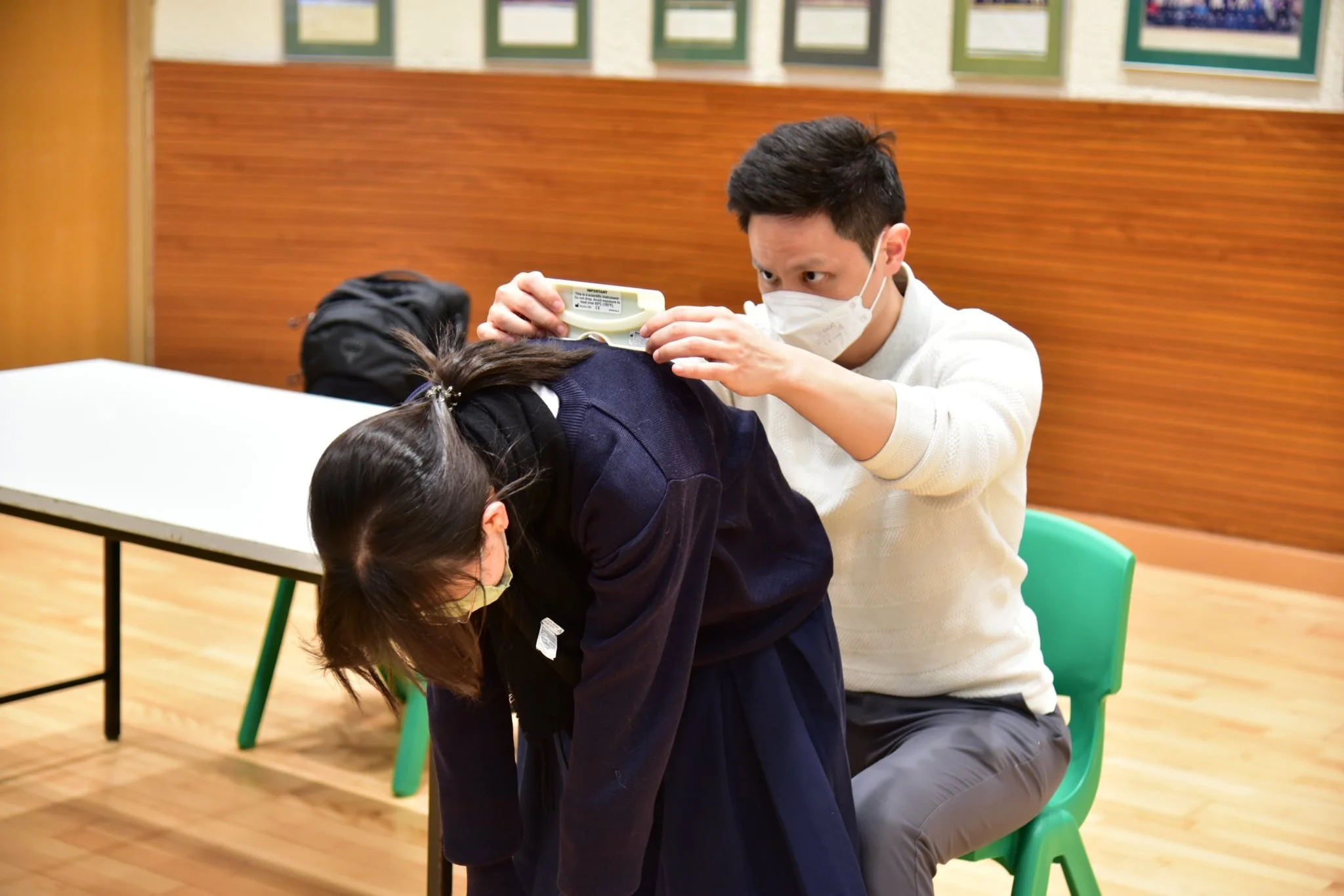
As part of the visit, simple spinal screening was conducted for participating students. This included observation of posture and body symmetry, as well as basic screening methods such as the forward bend test.
It is important to note that school screening is not a medical diagnosis. Its purpose is to identify students who may benefit from further assessment by an appropriate healthcare professional if noticeable asymmetry is found.
Backpack Use and Daily Habits
The session also covered practical advice on reducing unnecessary strain on the neck, shoulders, and back. While school bags are not considered a direct cause of adolescent idiopathic scoliosis, improper backpack use may contribute to discomfort.
Students were encouraged to:
Use both shoulder straps
Keep the backpack close to the body
Avoid carrying unnecessary items
Place heavier items closer to the back
Take regular breaks from prolonged sitting or screen use
Rather than focusing on “perfect posture,” students were encouraged to stay active, build healthy habits, and pay attention to changes in their bodies.
Conclusion
We would like to thank Ho Tung Secondary School for the invitation and for supporting student health education. Through early awareness, simple screening, and healthy daily habits, students can better understand and care for their spinal health during the important teenage growth years.
