
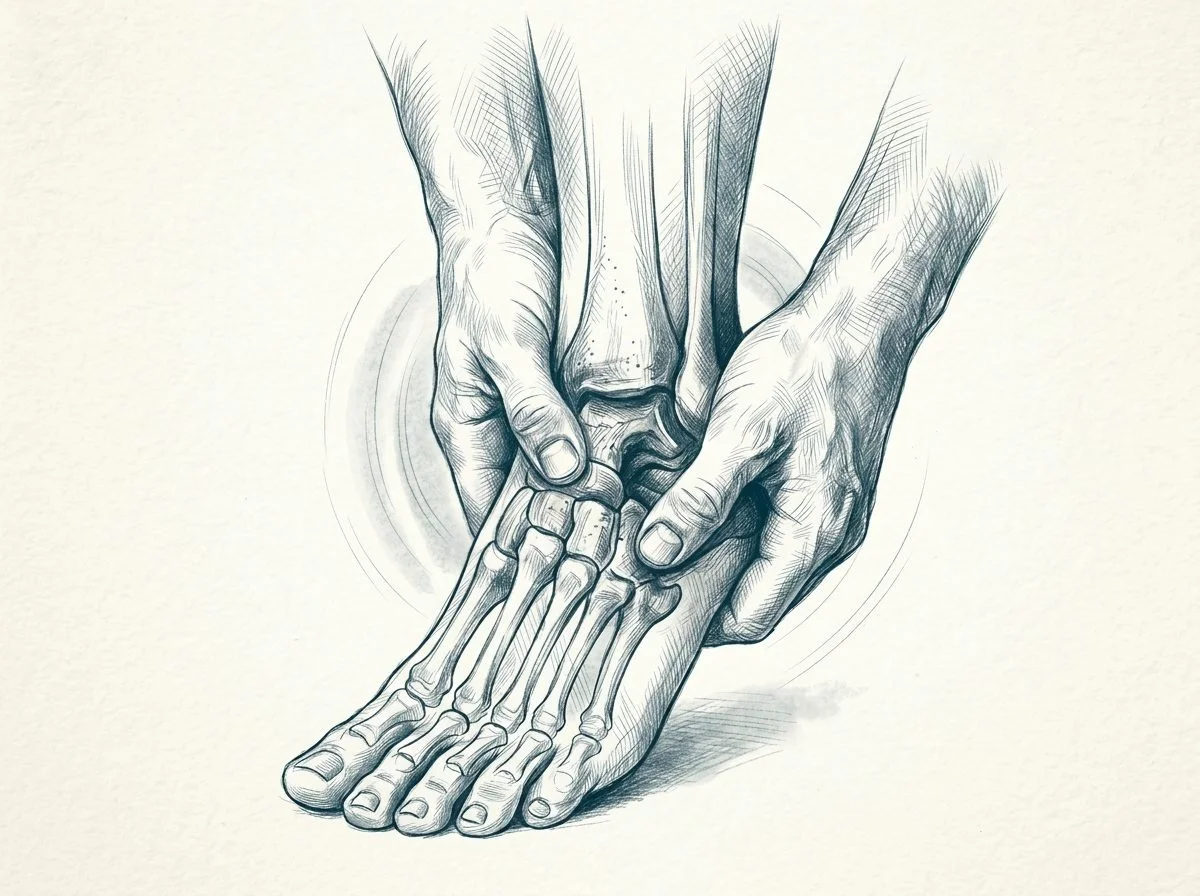
Foot & Ankle Pain
What is Foot & Ankle Pain?
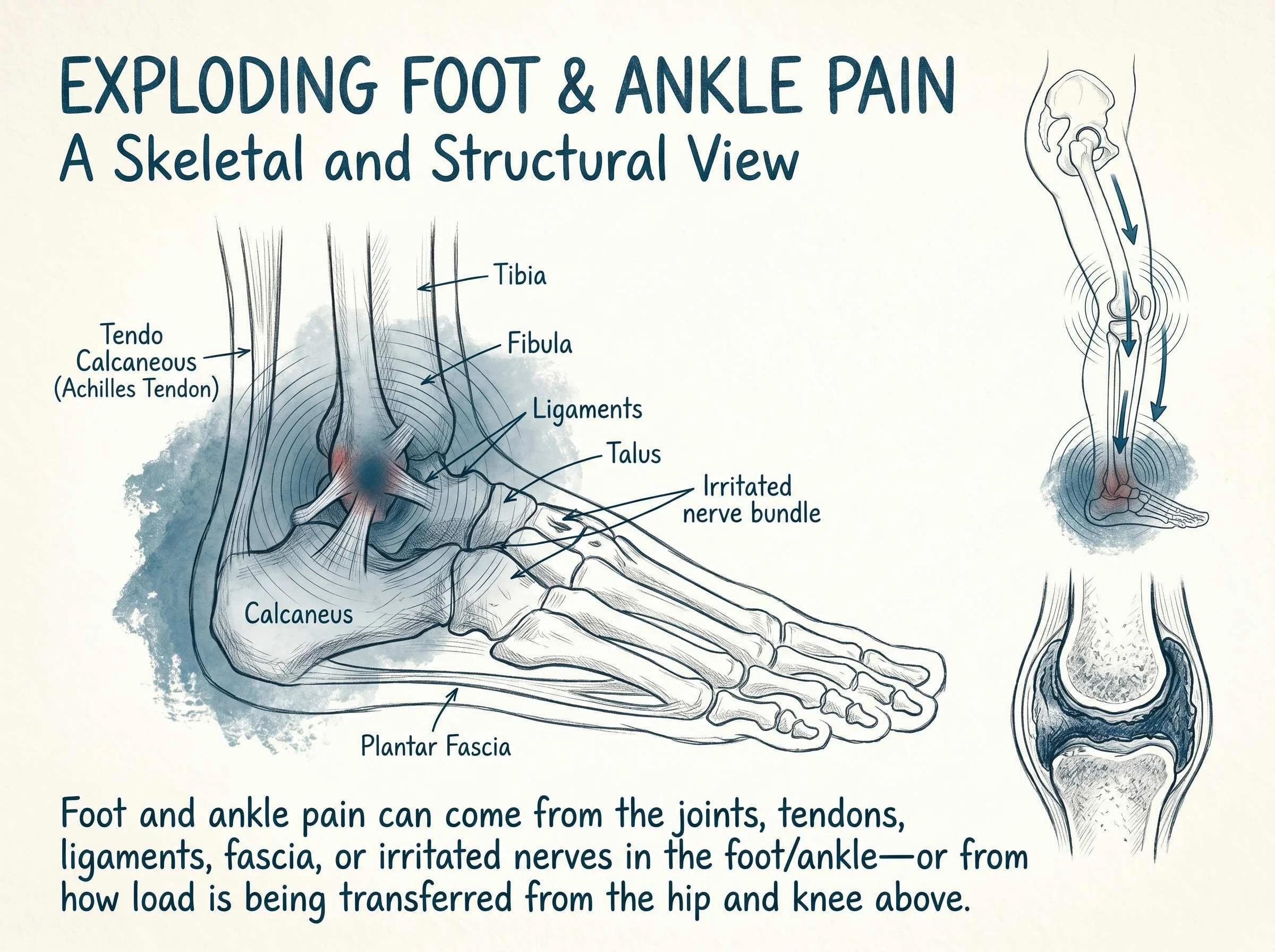
Foot and ankle pain can come from the joints, tendons, ligaments, fascia, or irritated nerves in the foot/ankle—or from how load is being transferred from the hip and knee above. Symptoms can start after a twist/sprain, a long day on your feet, a change in shoes, or a sudden increase in walking/running.
The most helpful first step is identifying your pattern—where you feel it (heel, arch, top of foot, ankle, outside/inside), what triggers it, and what eases it—so we can match care and exercises to your goals.
Foot & Ankle Pain (Most Common)
Many foot and ankle problems are related to overload (too much, too soon) or lingering stiffness/instability after prior sprains. The goal is to reduce irritation, restore mobility and control, and rebuild tolerance for standing, walking, running, and sport.
Common patterns include:
Heel or arch pain (often worse first steps in the morning)
Pain after long standing/walking shifts
Recurrent ankle sprains or “unstable” feeling
Achilles or tendon pain with running/jumping
What Foot & Ankle Pain Can Feel Like
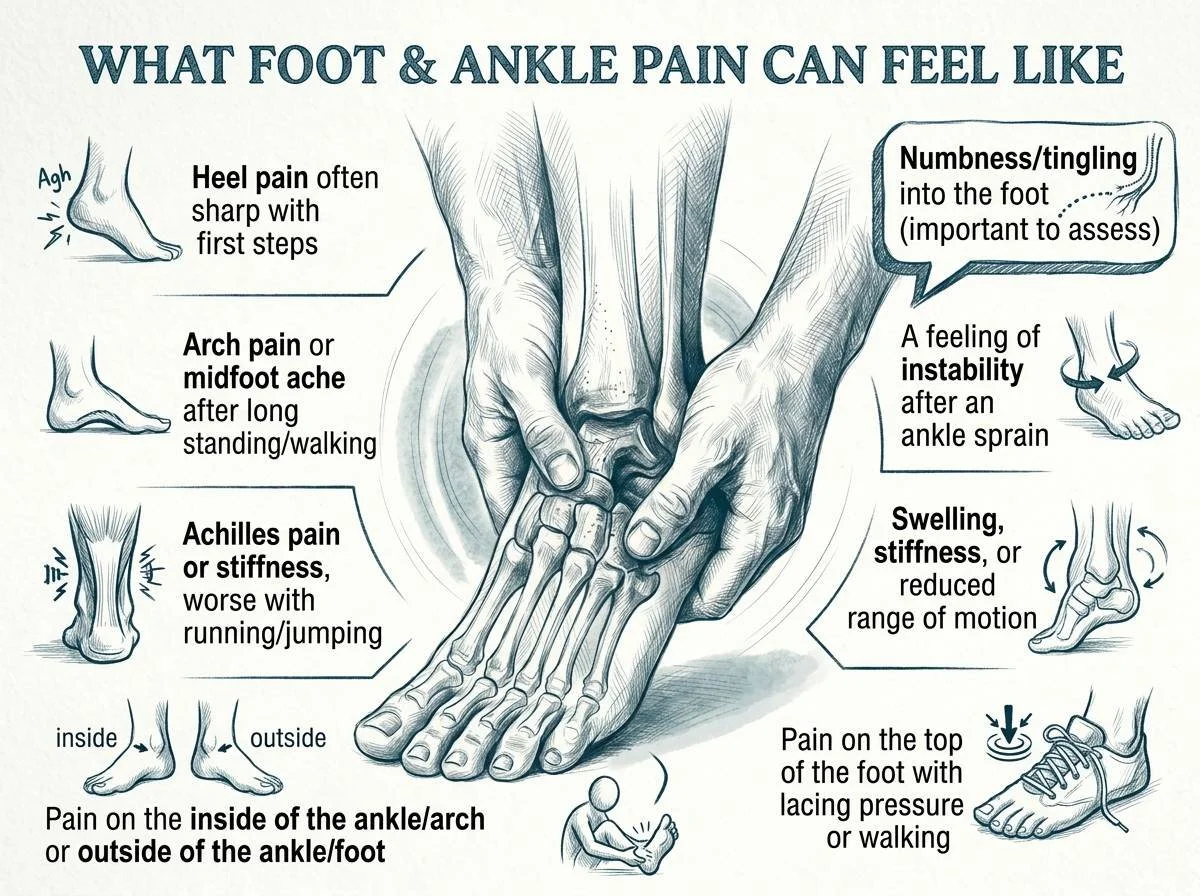
Foot/ankle pain may present as:
Heel pain (often sharp with first steps, then warms up)
Arch pain or midfoot ache after long standing/walking
Achilles pain or stiffness, worse with running/jumping
Pain on the inside of the ankle/arch or outside of the ankle/foot
Pain on the top of the foot with lacing pressure or walking
Swelling, stiffness, or reduced range of motion
A feeling of instability after an ankle sprain
Numbness/tingling into the foot (important to assess)
Get assessed promptly if you can’t bear weight after an injury, have significant swelling/bruising, severe tenderness over bone, deformity, or signs of infection (fever, redness, warmth spreading).
Why Foot & Ankle Pain Happens?
Most cases relate to how the foot/ankle joints and soft tissues are tolerating load and movement.
Common contributors include:
Sudden increases in walking/running/jumping volume

Prior ankle sprain with lingering stiffness or reduced control

Plantar fascia irritation (often heel/arch pain)

Foot mechanics and mobility limits (ankle stiffness can shift stress)

Tendon overload (Achilles, peroneals, posterior tibial, etc.)

Because several structures can refer pain in similar ways, the “exact cause” isn’t always obvious without a proper exam. If needed, we can advise whether imaging or referral is appropriate.
How Chiropractic Care Can Help Foot & Ankle Pain


Care is individualized based on your exam findings, goals, and comfort level. A typical plan may include:
1) Reducing pain and restoring motion
Hands-on care to improve comfort and mobility in the foot/ankle (and sometimes the calf/knee/hip, if contributing).
2) Improving mechanics and stability
When appropriate and with consent, this may include mobilisation/manipulation and soft-tissue techniques, plus movement retraining.
3) Strength and tolerance plan
A clear progression for:
Calf strength (including eccentric work when appropriate)
Foot intrinsic strength
Balance/proprioception (especially post-sprain)
Gradual return to walking/running/jumping
4) Practical guidance
Advice on:
Activity pacing and step-count/running progression
Footwear considerations (if relevant)
Warm-up, recovery, and symptom-monitoring strategies

Book an Appointment
We’ll assess your foot/ankle, identify the likely driver(s) of pain, and build a clear plan to get you back to comfortable, confident movement.