

Posture & Desk-Related Discomfort
What is Posture & Desk-Related Discomfort?
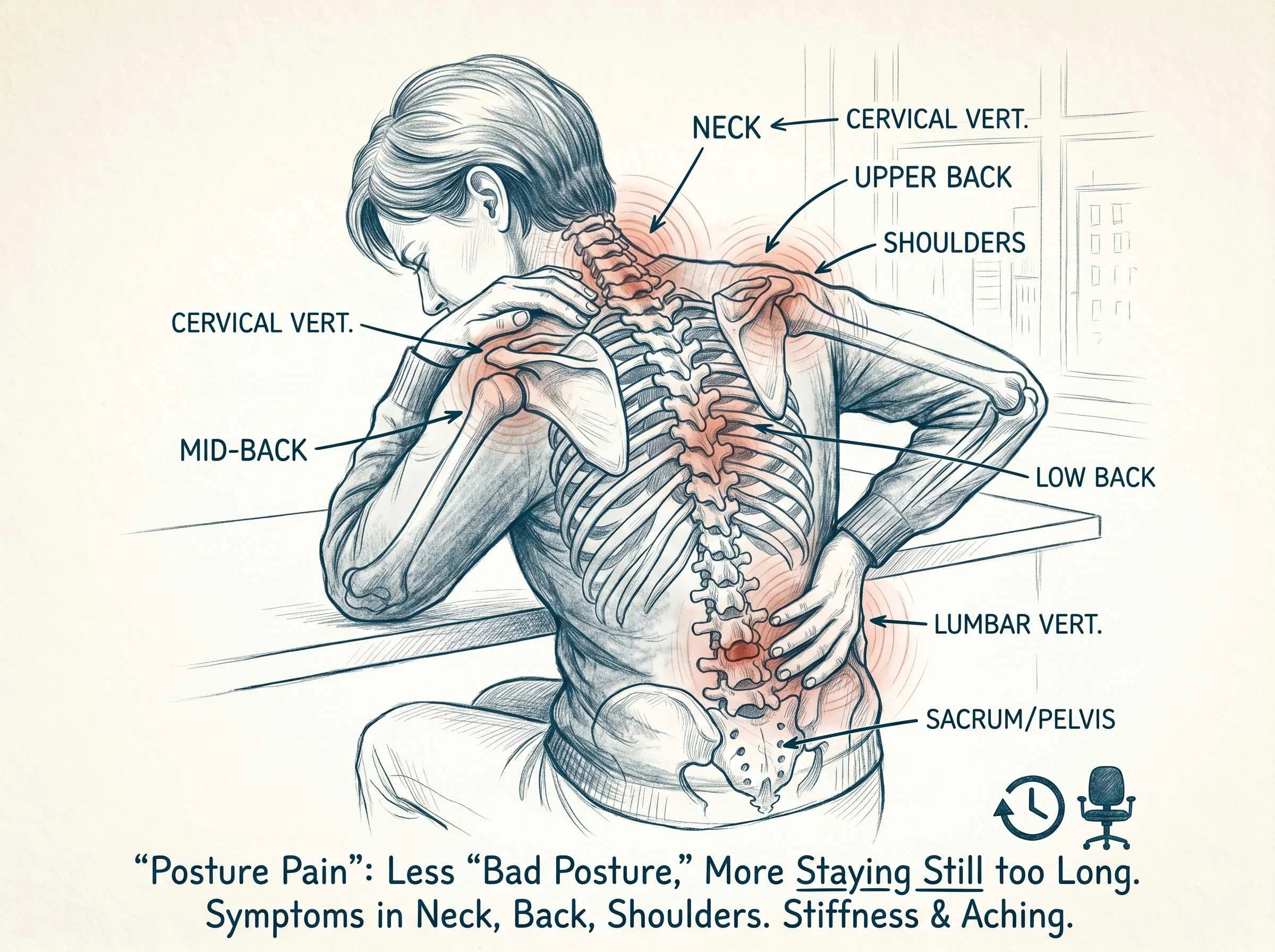
“Posture pain” is usually less about one “bad posture” and more about staying in the same position for too long—most commonly during desk work, studying, or long commutes. Symptoms often show up in the neck, upper back, shoulders, mid-back, or low back, and can include stiffness, aching, tension, or headaches.
The most helpful first step is identifying your pattern—where you feel it, what tasks trigger it (laptop work, dual monitors, long meetings), and what positions relieve it—so we can match care and a plan to your day-to-day demands.
Desk-Related Discomfort (Most Common)
Most desk-related discomfort is related to reduced movement variety and how the spine, joints, and surrounding tissues are tolerating sustained positions and repetitive tasks.
The goal is to reduce sensitivity, restore comfortable motion, and build a routine that keeps you feeling better without needing “perfect posture” all day.
What Desk-Related Discomfort Can Feel Like
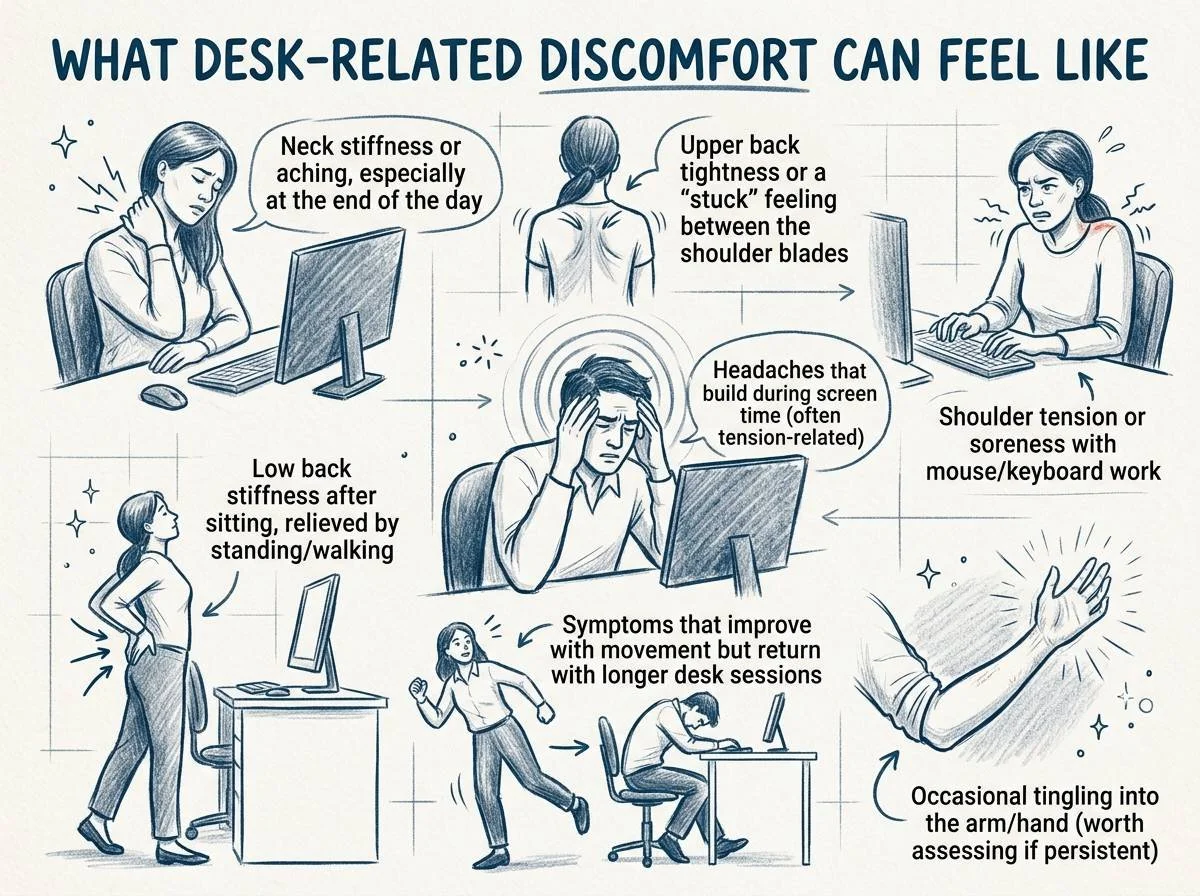
You may notice:
Neck stiffness or aching, especially at the end of the day
Upper back tightness or a “stuck” feeling between the shoulder blades
Shoulder tension or soreness with mouse/keyboard work
Headaches that build during screen time (often tension-related)
Low back stiffness after sitting, relieved by standing/walking
Symptoms that improve with movement but return with longer desk sessions
Occasional tingling into the arm/hand (worth assessing if persistent)
Get assessed promptly if you have progressive weakness, significant numbness/tingling that is worsening, new balance issues, or symptoms after a significant fall/accident.
Why Posture & Desk Discomfort Happens?
Most cases relate to how the spine, discs, joints, and surrounding tissues are tolerating load and sustained positions.
Common contributors include:
Prolonged sitting and reduced movement breaks
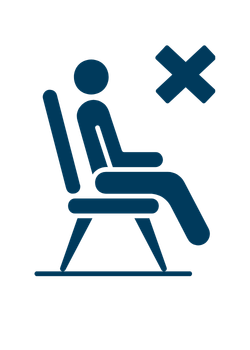
Screen/monitor setup (height, distance, side monitor dominance)

Laptop work (encourages forward head/rounded shoulder positions)

Repetitive mouse/keyboard use and sustained shoulder/forearm tension

Reduced upper-back mobility and limited neck rotation/extension tolerance

Because symptoms can overlap (neck, shoulder, and upper back often influence each other), the “exact cause” isn’t always obvious without a proper exam. If needed, we can advise whether imaging or referral is appropriate.

How Chiropractic Care Can Help Desk-Related Discomfort

Care is individualized based on your exam findings, goals, and comfort level. A typical plan may include:
1) Reducing pain and restoring motion
Hands-on care may help improve comfort and mobility in the neck, upper back, ribs, and shoulders (when appropriate and with consent).
2) Addressing contributing factors (not just “posture”)
We’ll look at the drivers: movement tolerance, joint stiffness, muscle endurance, and workstation demands.
3) Strength + endurance for “desk resilience”
A simple progression to improve:
Neck and upper-back endurance
Shoulder blade control
Thoracic mobility
Core/hip support for sitting tolerance
4) Practical workstation + habit upgrades
Clear, realistic changes such as:
Monitor at eye level (or as close as possible)
Keyboard/mouse closer to reduce reaching
Micro-break routine (30–60 seconds every 30–45 minutes)
A few targeted mobility drills to “reset” stiffness during the day

Book an Appointment
We’ll assess what’s driving your discomfort, help you feel better quickly, and build a plan that fits your desk routine so symptoms don’t keep returning.