
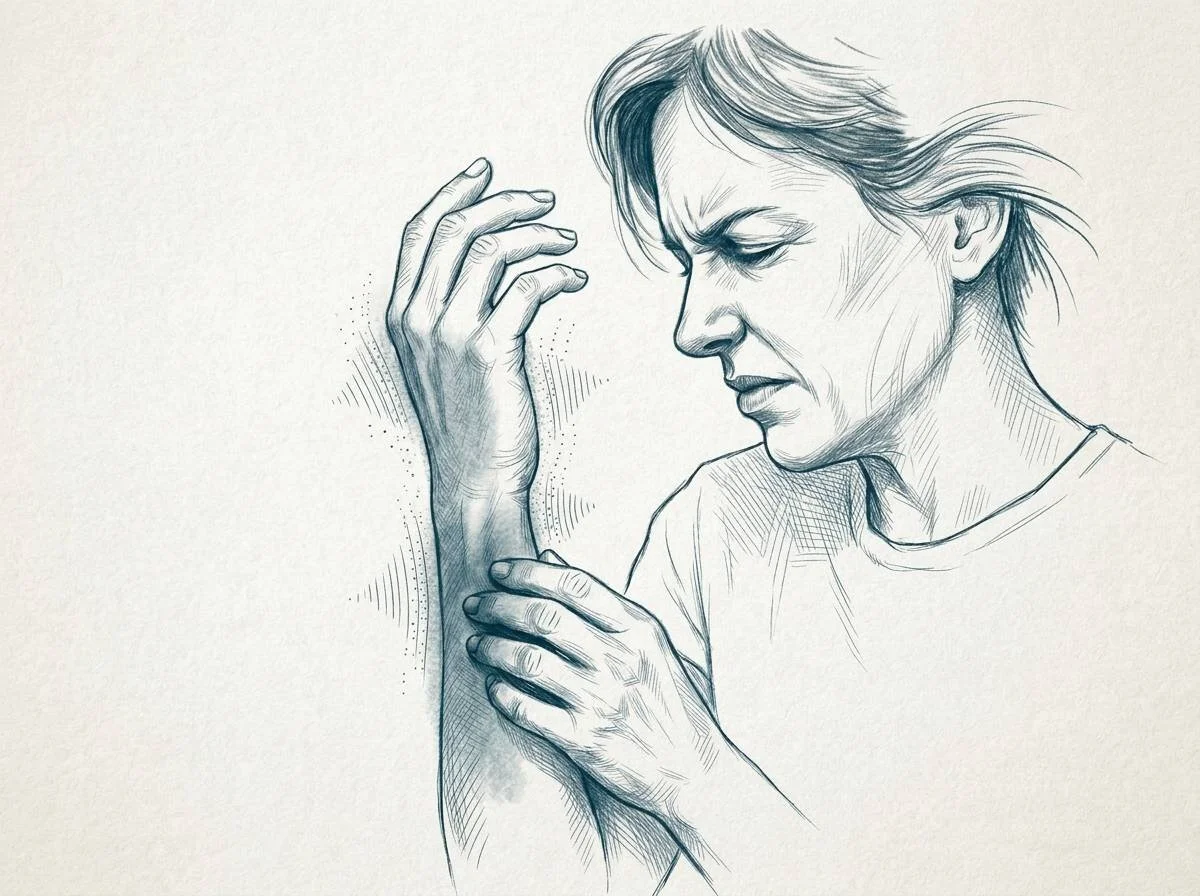
Numbness & Tingling
What is Numbness & Tingling?
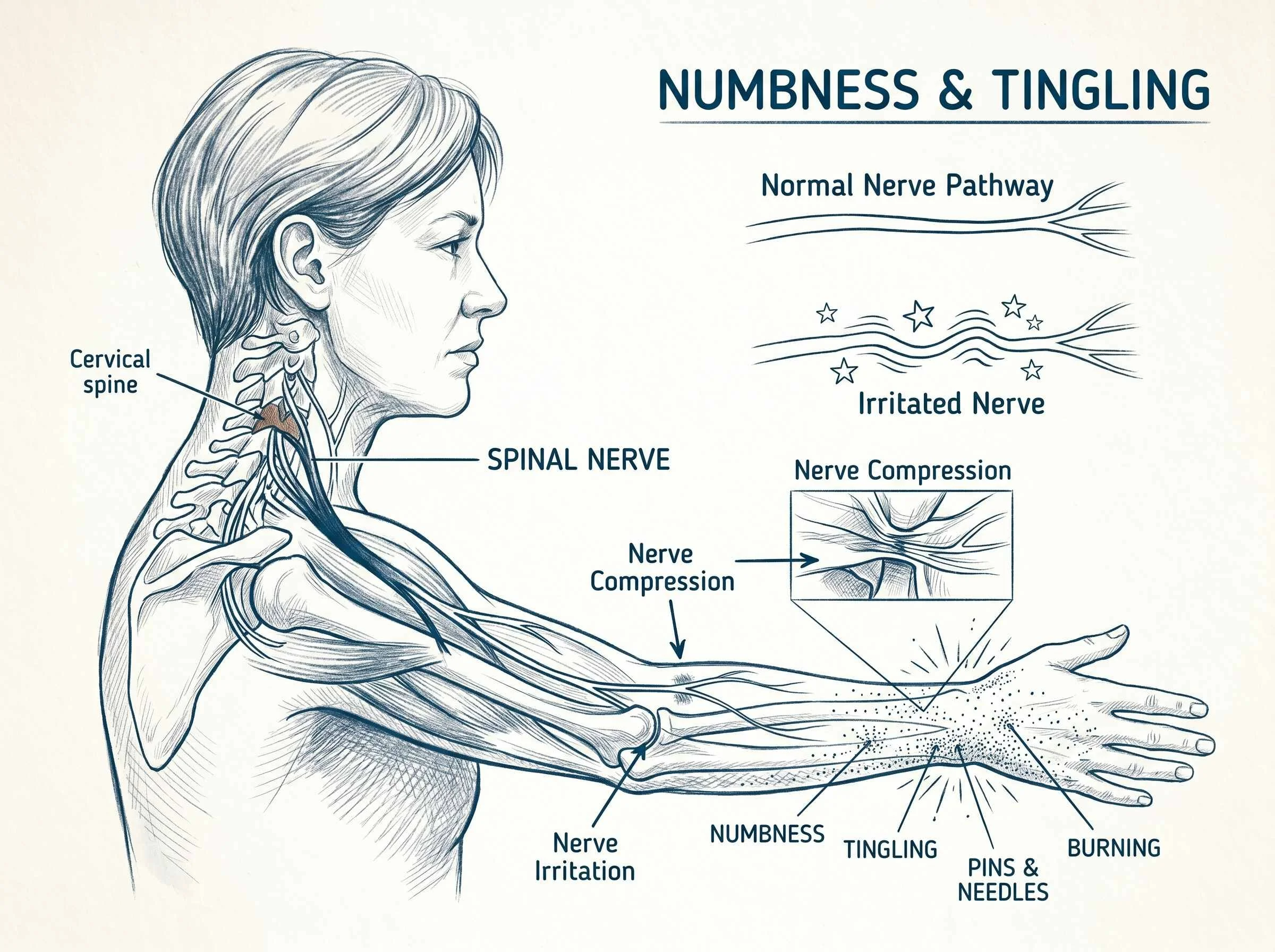
Numbness, tingling, “pins and needles,” or burning sensations can happen when a nerve is irritated, sensitized, or compressed—anywhere from the spine to the arm/leg to smaller peripheral nerve pathways. Symptoms can be intermittent (often position-related) or more constant, and may occur with pain, stiffness, or weakness.
The most helpful first step is identifying where you feel it (hand/fingers vs. leg/foot), when it shows up (sleeping, driving, computer work, lifting, walking), and whether there are any strength or coordination changes—so we can determine what’s contributing and the right next steps.
Numbness & Tingling (Most Common)
Many cases are related to one of these patterns:
Neck-related nerve irritation → symptoms into the shoulder/arm/hand
Low-back-related nerve irritation → symptoms into the buttock/leg/foot
Peripheral nerve irritation/entrapment → symptoms in a more specific distribution (e.g., wrist, elbow, ankle)
The goal is to identify which nerve pathway is involved, what’s provoking it, and how to restore normal tolerance to movement and load.
What Numbness & Tingling Can Feel Like
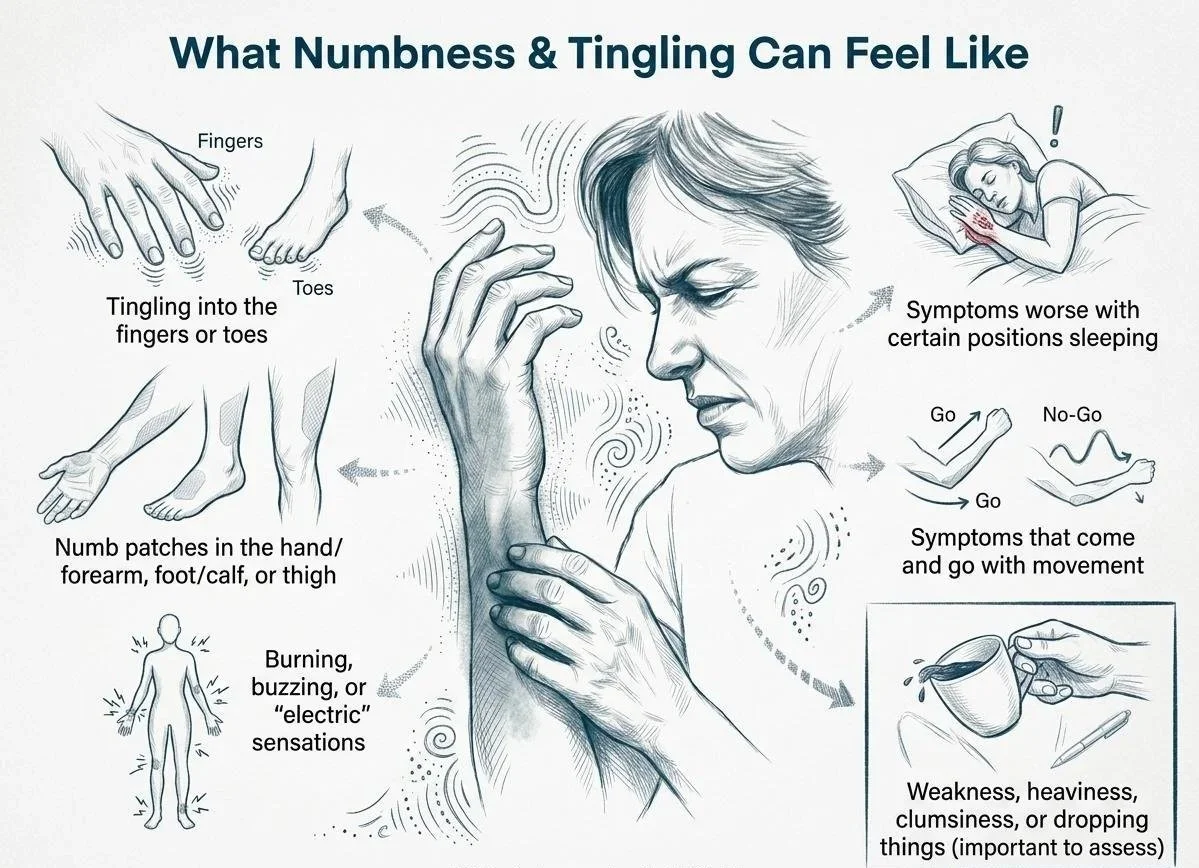
Symptoms may include:
Tingling into the fingers or toes
Numb patches in the hand/forearm, foot/calf, or thigh
Burning, buzzing, or “electric” sensations
Symptoms worse with certain positions (sleeping, driving, sitting, computer work)
Symptoms that come and go with movement
Weakness, heaviness, clumsiness, or dropping things (important to assess)
Seek urgent medical care if you have any of the following:
New or rapidly worsening weakness
New bowel/bladder changes or saddle numbness
Significant trouble walking/balance changes that are worsening
Facial droop, slurred speech, severe headache, fainting, or chest pain
Why Numbness & Tingling Happens?
Most cases relate to how the nervous system and surrounding tissues are tolerating load and movement.
Common contributors include:
Nerve root irritation in the neck or low back (often posture/load related)

Disc or joint mechanics affecting space/tolerance around a nerve

Muscle tension and reduced mobility increasing nerve sensitivity

Repetitive positions (long sitting, driving, laptop/phone use, sleeping positions)

Peripheral nerve irritation (e.g., at the wrist, elbow, shoulder, hip, or ankle)

Because symptoms can overlap and nerves can be irritated in more than one place, the “exact cause” isn’t always obvious without a proper exam. If needed, we can advise whether imaging, referral, or co-management is appropriate.

How Chiropractic Care Can Help Numbness & Tingling

Care is individualized based on your exam findings, goals, and comfort level. A typical plan may include:
1) Identifying the source and ruling out red flags
We’ll determine whether symptoms are more consistent with a spine-related issue, a peripheral nerve irritation, or another contributor.
2) Reducing irritation and improving movement
When appropriate and with consent, this may include mobilisation/manipulation, soft-tissue techniques, and mobility work targeting the involved area (neck/upper back/low back, or other relevant regions).
3) Nerve-friendly rehab
A plan that may include:
Gradual range-of-motion work
Strengthening for support and control
Ergonomic and positioning strategies
Nerve mobility exercises (only when appropriate)
4) Practical guidance for daily life
Adjustments to sleep positions, workstation setup, driving posture, and activity pacing—so symptoms calm down and stay calmer.

Book an Appointment
If you’re dealing with ongoing numbness or tingling, we’ll assess your symptoms, identify the likely driver(s), and build a clear plan to help you return to comfortable, confident movement.