
Sciatica / Leg Pain
What is Sciatica / Leg Pain?
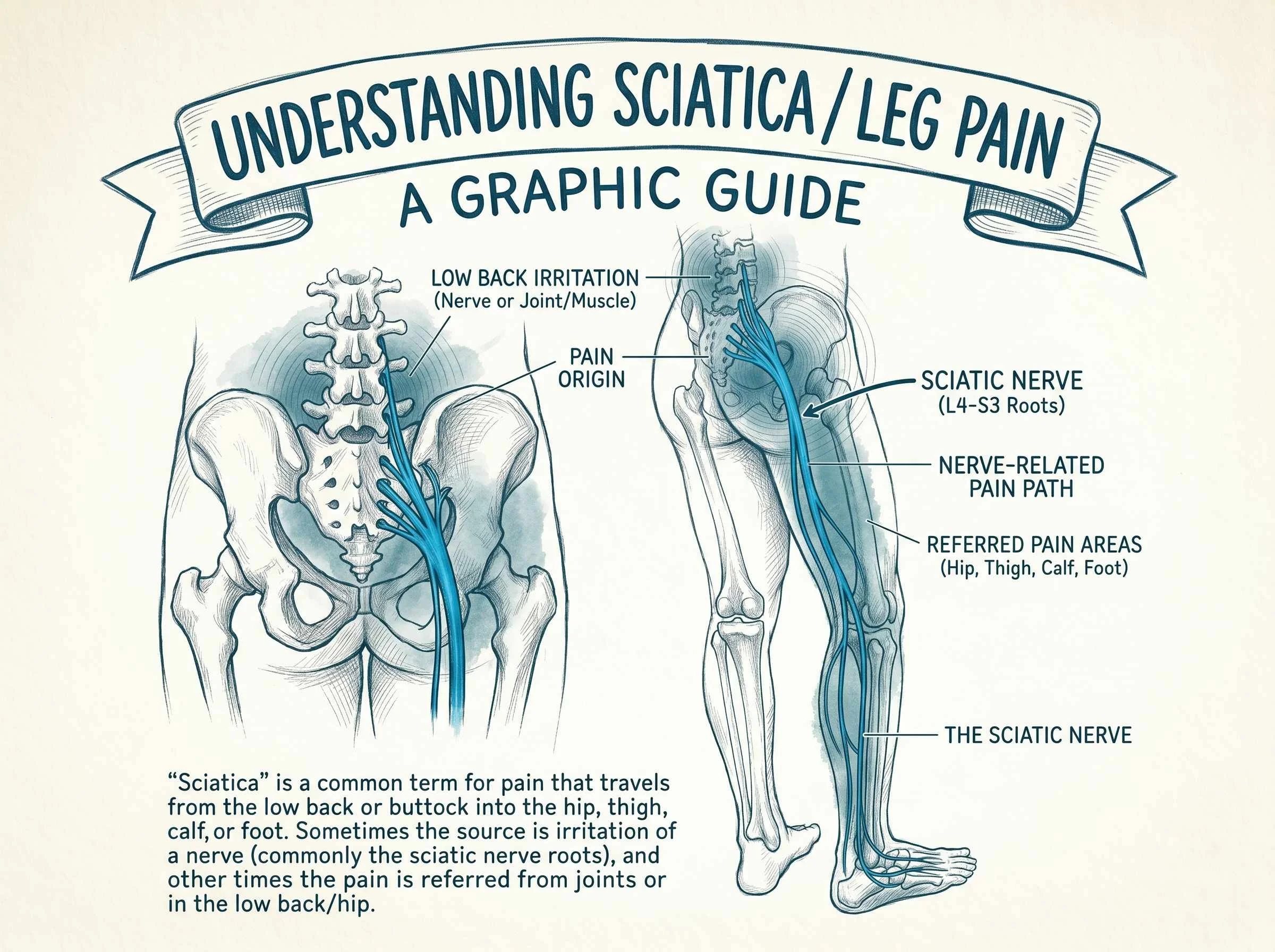
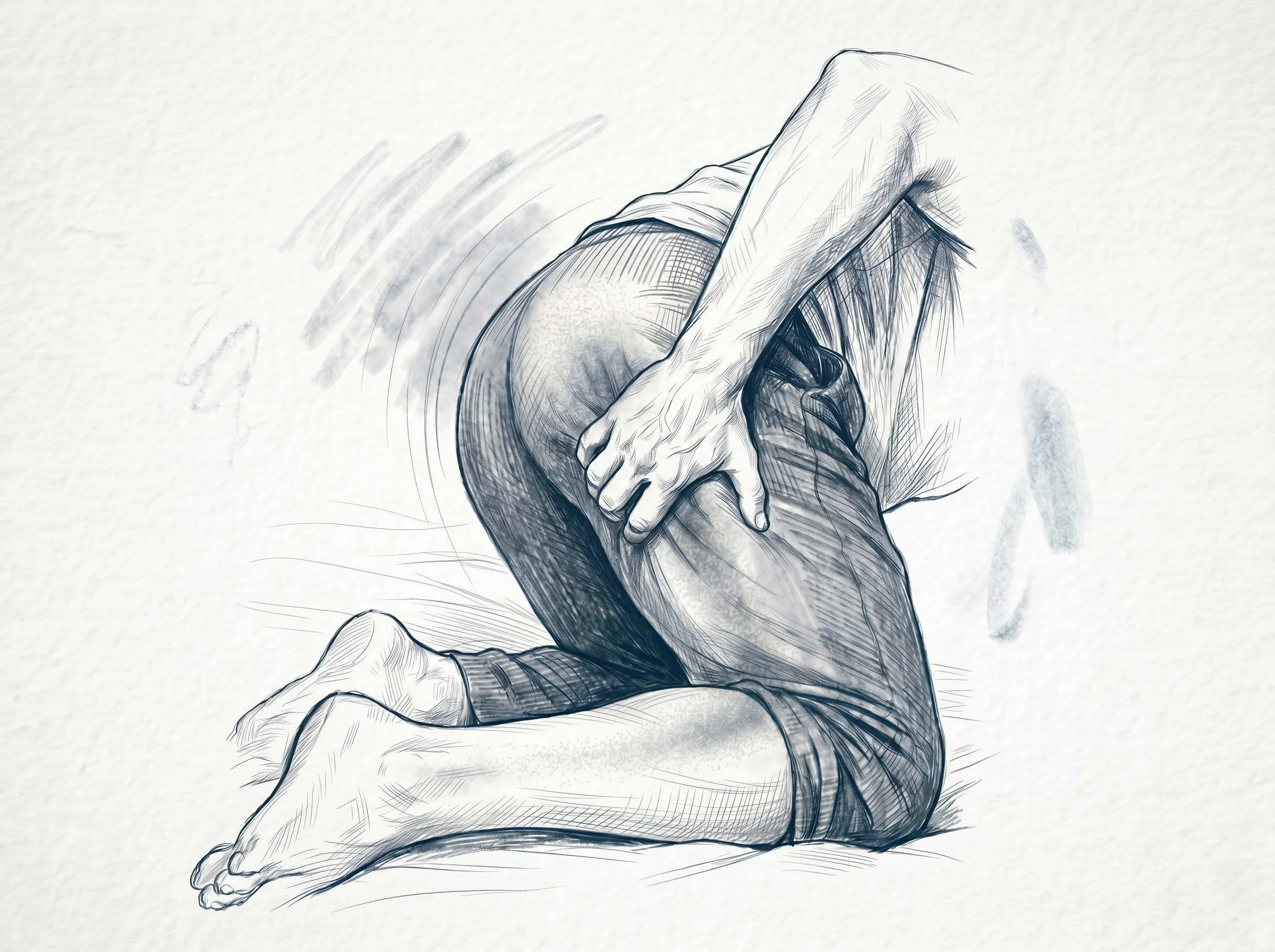
“Sciatica” is a common term for pain that travels from the low back or buttock into the hip, thigh, calf, or foot. Sometimes the source is irritation of a nerve (commonly the sciatic nerve roots), and other times the pain is referred from joints or muscles in the low back/hip.
Symptoms can come on suddenly (after lifting, bending, awkward movement) or build gradually (often tied to long sitting, driving, training changes, or poor sleep).
The most important first step is identifying your pattern—what movements/positions trigger it, what calms it down, and whether there are true nerve symptoms—so we can choose the right care plan.
Sciatica / Leg Pain (Most Common)
When people say “sciatica,” they often mean:
Pain in the buttock that shoots down the leg
Symptoms that are worse with sitting or bending
“Tight hamstring” sensations that don’t stretch out
The good news: many cases are mechanical and manageable, especially when we match treatment and exercises to the exact presentation.
What Sciatica / Leg Pain Can Feel Like
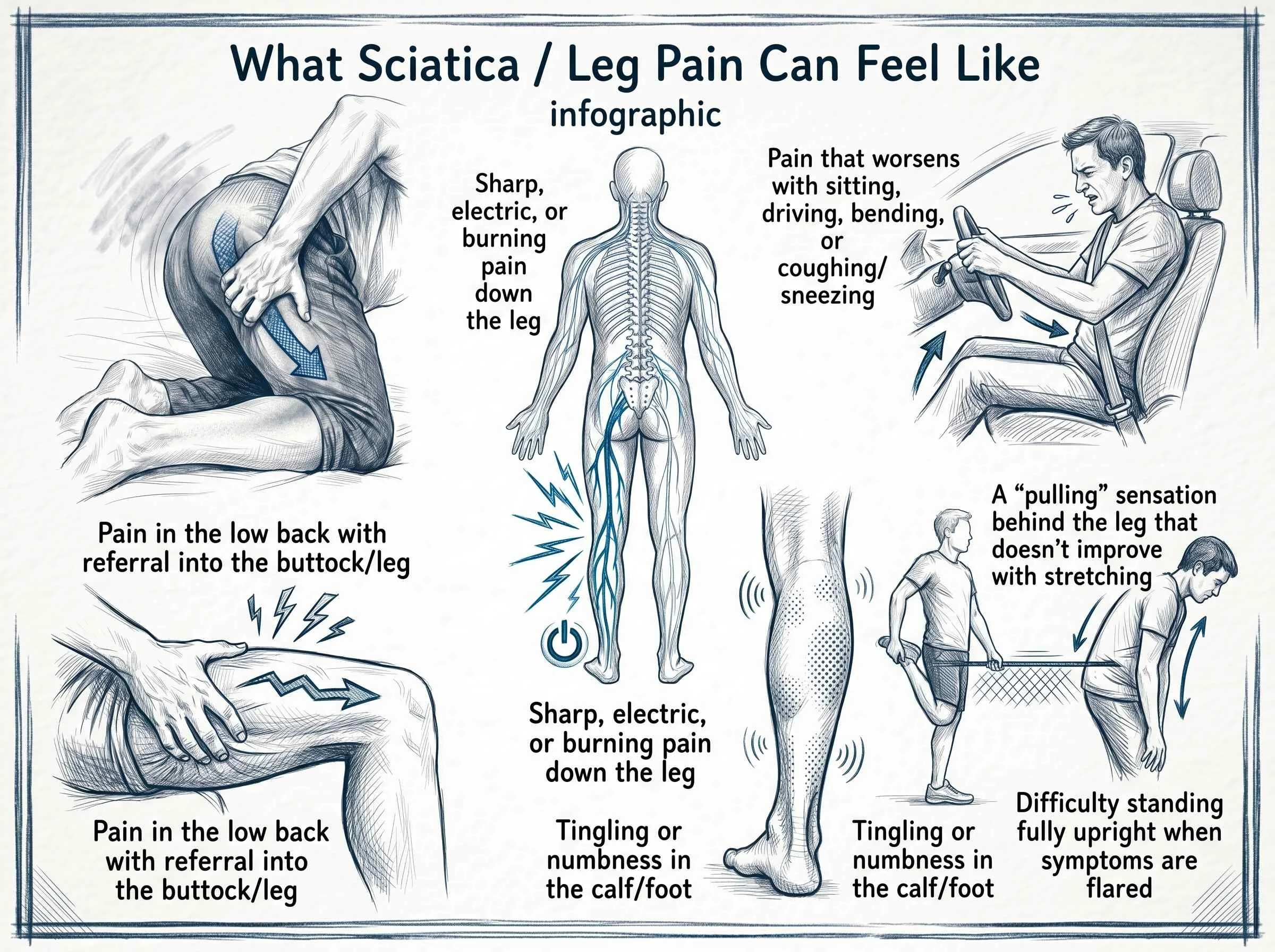
Sciatica/leg pain may present as:
Pain in the low back with referral into the buttock/leg
Sharp, electric, or burning pain down the leg
Tingling or numbness in the calf/foot
Pain that worsens with sitting, driving, bending, or coughing/sneezing
A “pulling” sensation behind the leg that doesn’t improve with stretching
Difficulty standing fully upright when symptoms are flared
If you have progressive weakness, new trouble lifting your foot, significant numbness, or changes in bladder/bowel control, you should seek urgent medical evaluation.
Why Sciatica / Leg Pain Happens?
Most cases relate to how the spine, discs, joints, and surrounding tissues are tolerating load and movement.
Common contributors include:
Irritation/compression of a nerve root (often disc-related)

Joint irritation in the low back or pelvis referring pain downward
Rapid increases in lifting, running, or activity volume

Prolonged sitting and reduced movement variety
Muscle tension (glutes/hip rotators) mimicking sciatica-like referral

BBecause many structures can refer pain in similar ways, the “exact cause” isn’t always obvious without a proper exam. If needed, we can advise whether imaging or referral is appropriate.
How Chiropractic Care Can Help Sciatica / Leg Pain
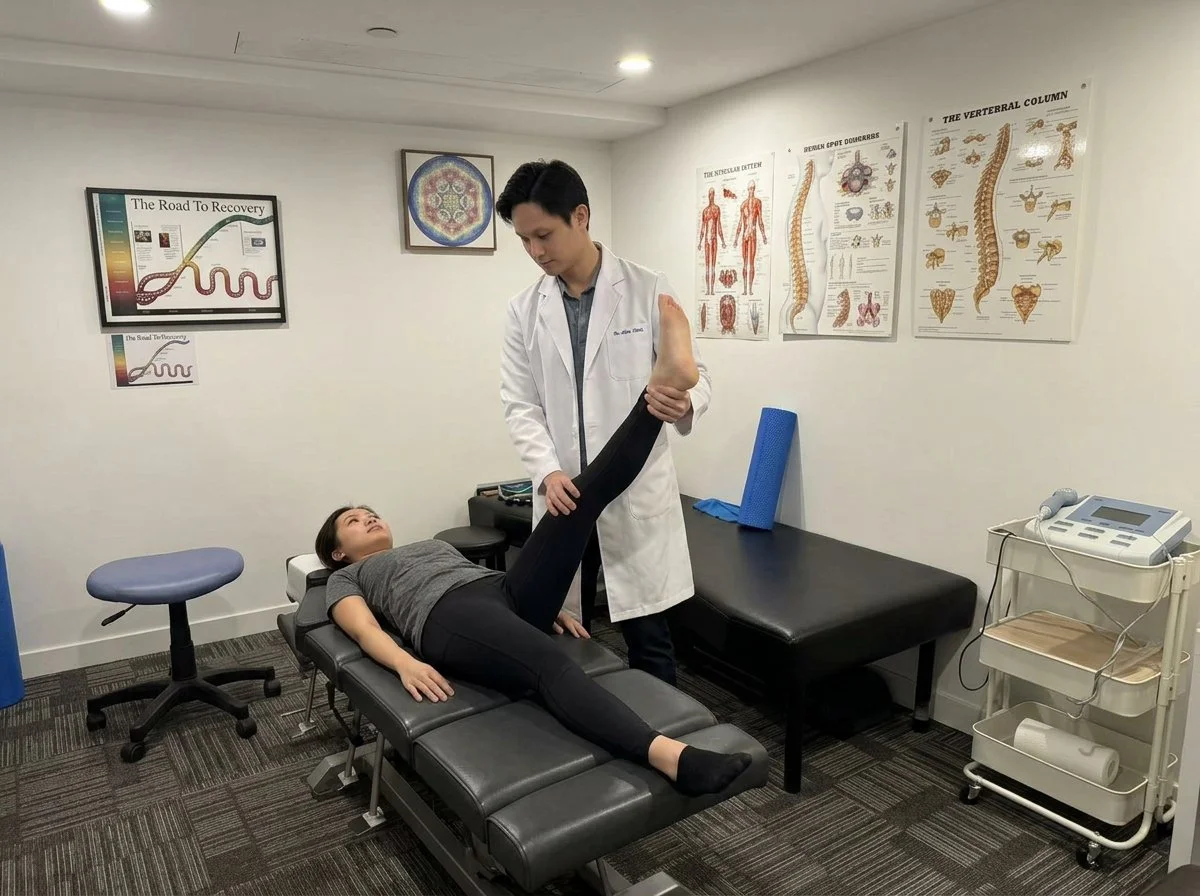

Chiropractic care aims to reduce pain and stiffness, restore comfortable movement, and support a steady return to normal activities. Our approach typically focuses on:
1) Calming the flare-up and improving tolerance
Reducing protective spasm and helping you find positions/movements that settle symptoms.
2) Restoring motion and mechanics
When appropriate and with consent, this may include mobilisation/manipulation and soft-tissue work.
3) Building resilience with targeted exercises
A plan to improve hip strength, trunk control, and nerve mobility (when appropriate).
4) Guidance for work, lifting, and sitting
Simple strategies to reduce repeated aggravation while you recover.
Book an Appointment
Not sure if it’s sciatica or something else? We’ll assess your symptoms, identify your pattern, and recommend the right plan.