
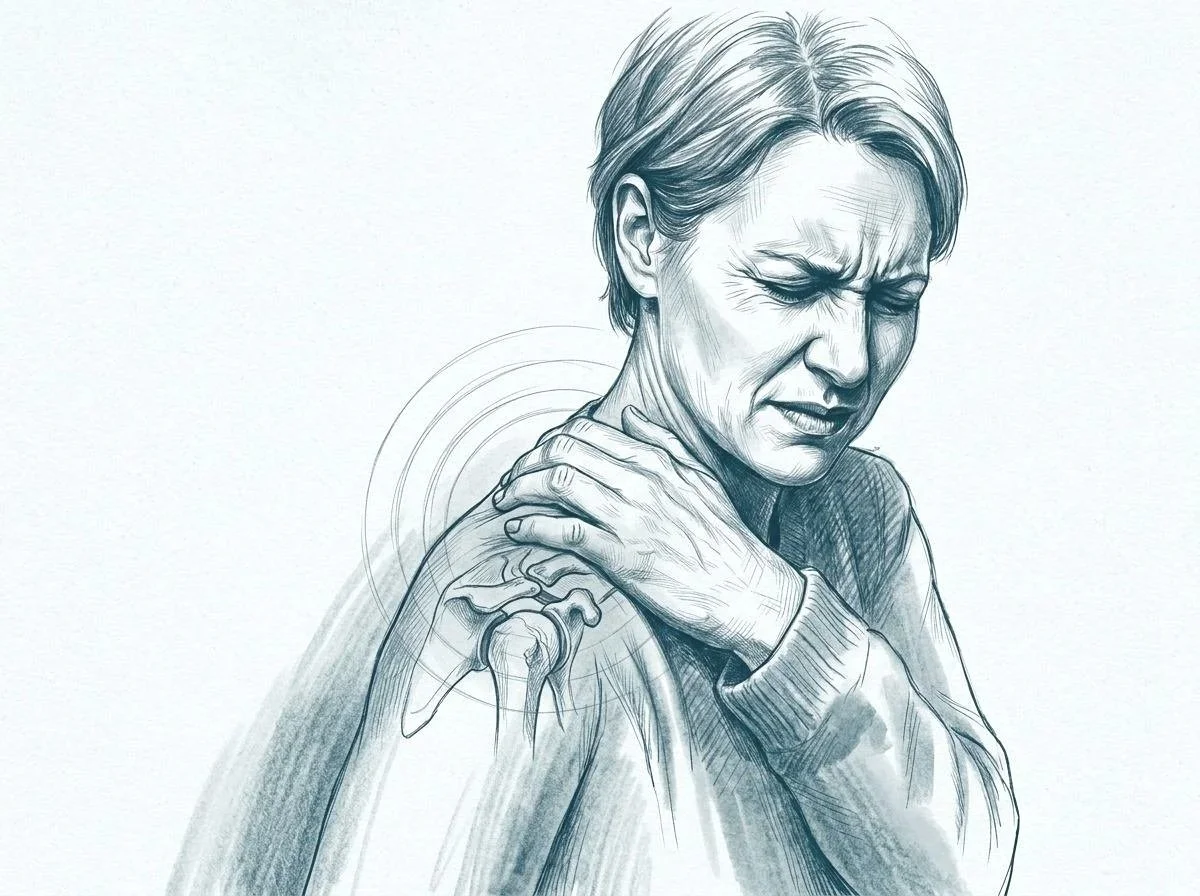
Shoulder Pain
What is Shoulder Pain?
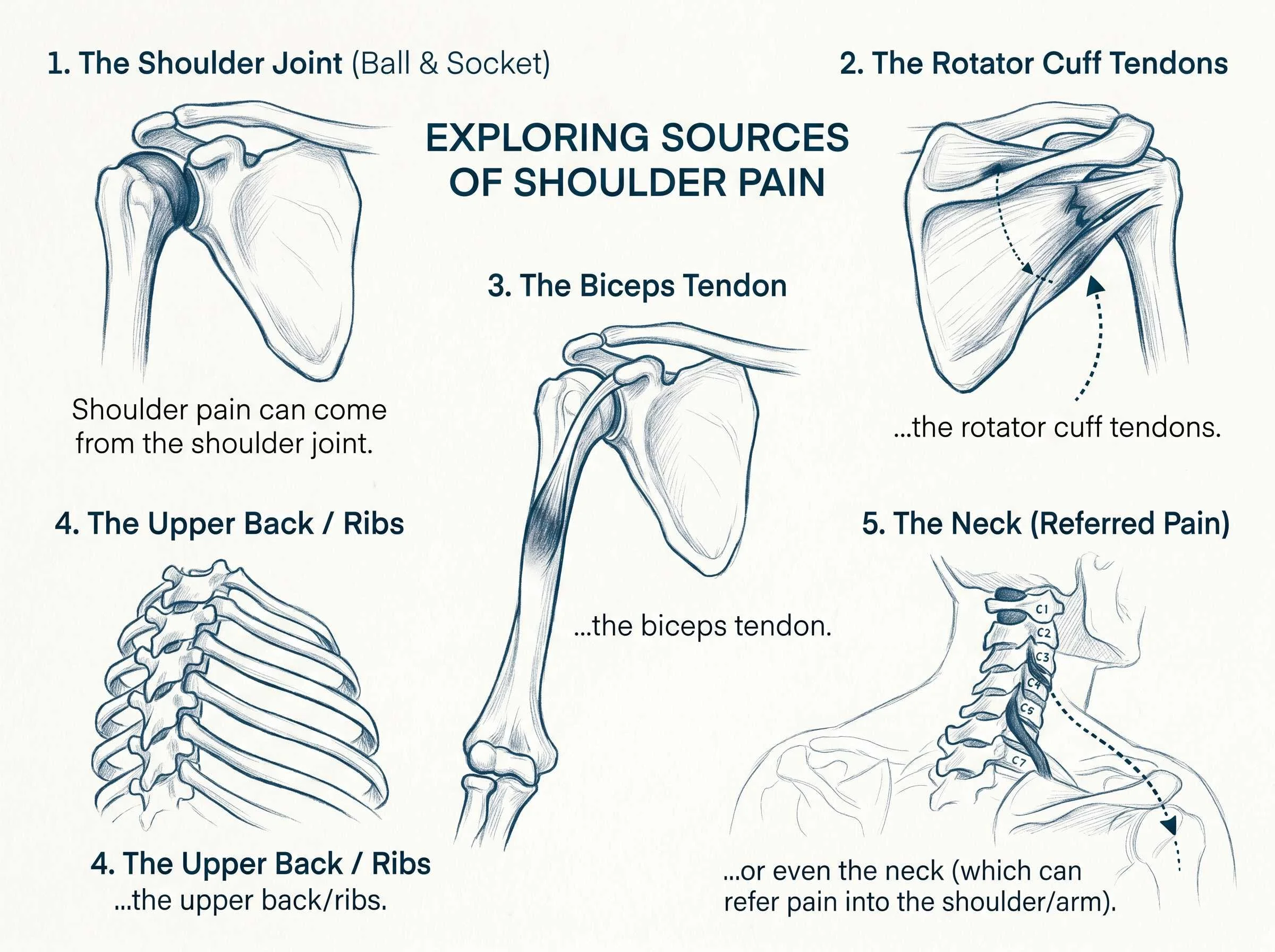
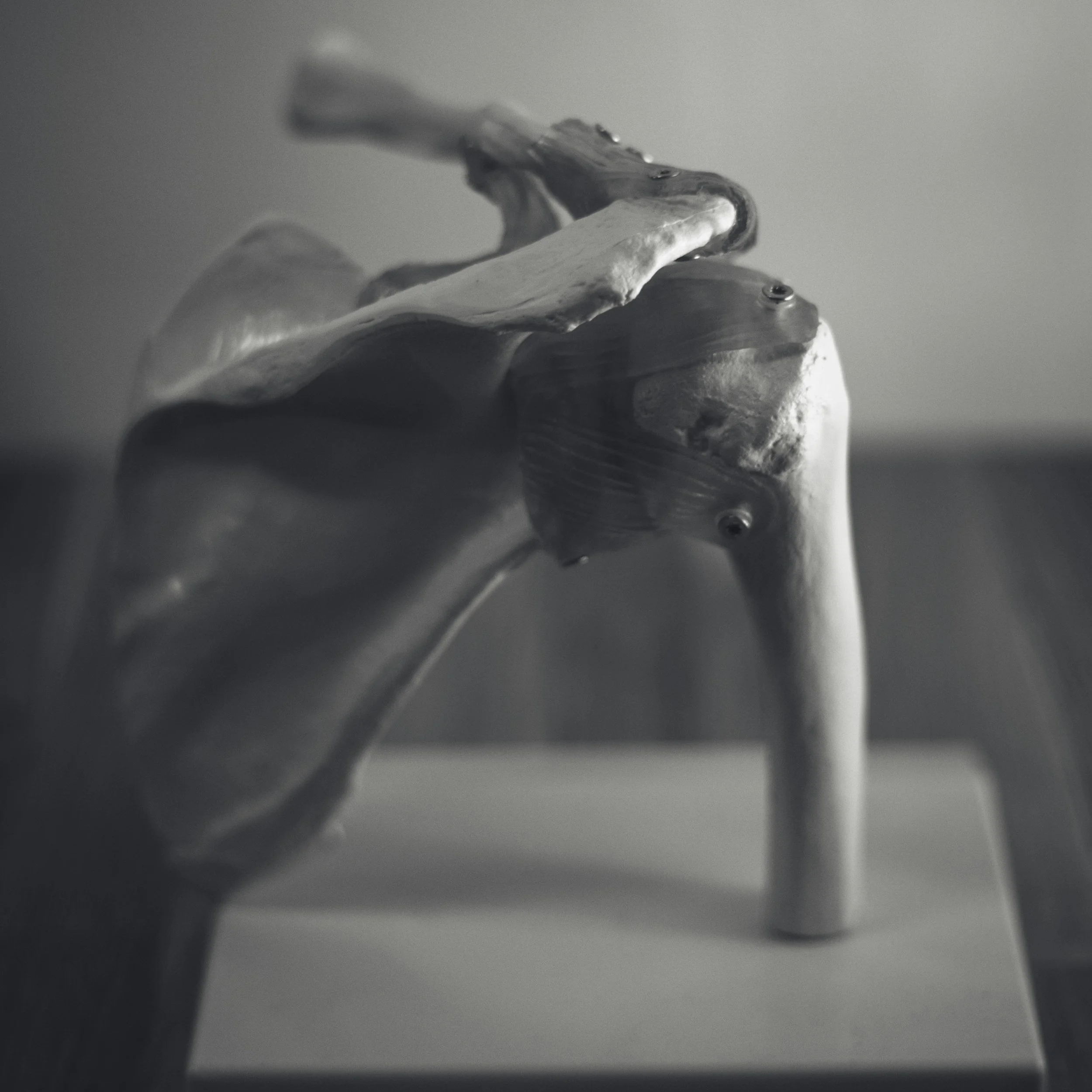
Shoulder pain can come from the shoulder joint, the rotator cuff tendons, the biceps tendon, the upper back/ribs, or even the neck (which can refer pain into the shoulder/arm). It may start after a clear incident (lift, fall, awkward sleep), or creep in gradually with desk work, repetitive use, or training changes.
The most helpful first step is figuring out what movements or positions trigger it (overhead reaching, pressing, pulling, sleeping, desk posture), so we can match care and exercises to your specific pattern.
Shoulder Pain (Most Common)
Most shoulder pain we see is related to one (or a combination) of the following:
Tendon irritation / overload (rotator cuff or biceps)
Reduced shoulder mobility (stiffness that changes how the joint loads)
Poor shoulder blade control (scapular mechanics under load)
Neck or upper-back stiffness referring pain into the shoulder
The goal isn’t “perfect posture” or “never lifting again”—it’s restoring comfortable range of motion, rebuilding strength and tolerance, and getting you back to the activities you enjoy.
What Shoulder Pain Can Feel Like
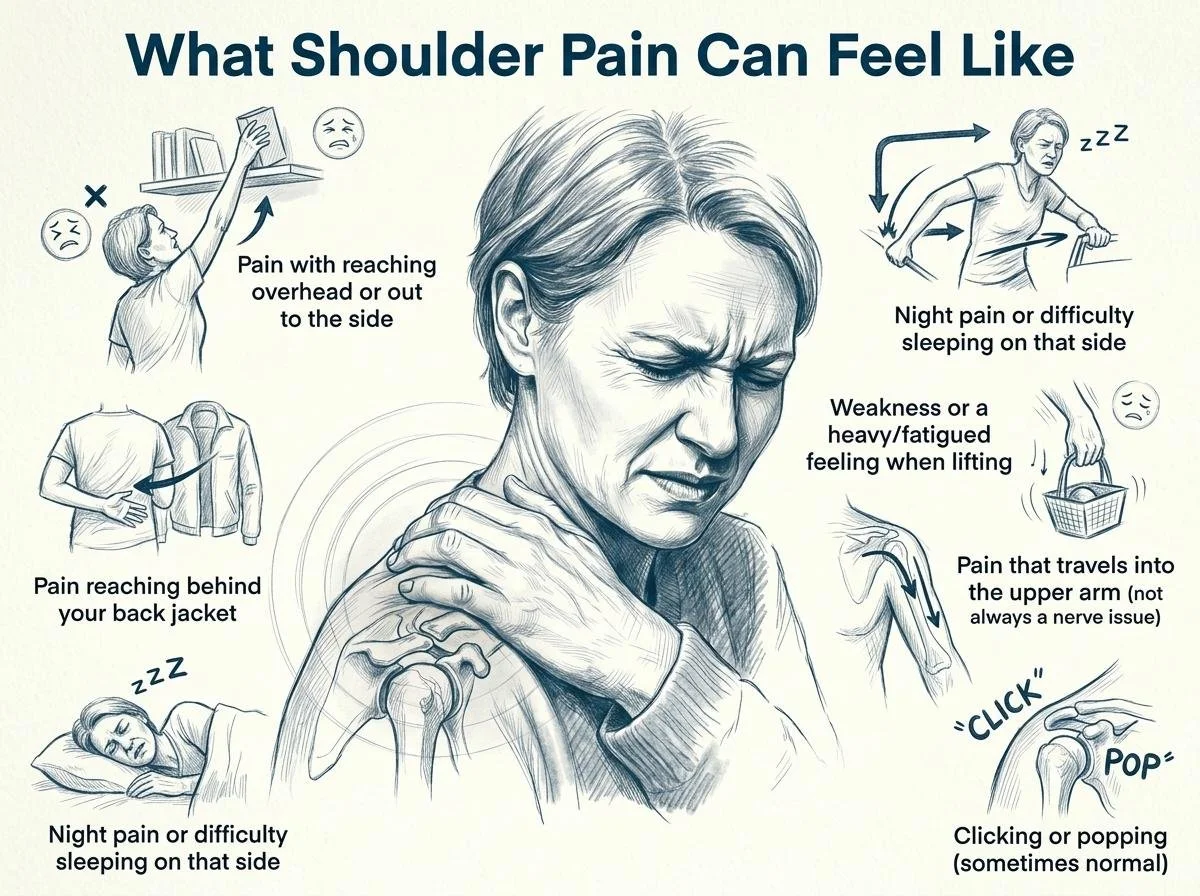
Shoulder pain may present as:
Pain with reaching overhead or out to the side
Pain reaching behind your back (jacket, bra strap, seat belt)
Night pain or difficulty sleeping on that side
A sharp “catch” with certain angles
Weakness or a heavy/fatigued feeling when lifting
Pain that travels into the upper arm (not always a nerve issue)
Clicking or popping (sometimes normal, sometimes worth assessing)
Get assessed promptly if you can’t lift your arm after an injury, you notice a visible deformity, you have major bruising/swelling, or you feel sudden significant weakness.
Why Shoulder Pain Happens?
Most cases relate to how the shoulder joint, surrounding tendons, and the upper back/neck are tolerating load and movement.
Common contributors include:
Sudden training/workload increases (gym, sport, repetitive job tasks)
Rotator cuff or biceps tendon overload (often from pressing, pulling)
Upper-back (thoracic) stiffness changing how the shoulder moves overhead
Sleep position and stress increasing sensitivity and slowing recovery

Stiffness in the shoulder joint (capsule) reducing smooth movement
Because many structures can refer pain in similar ways, the “exact cause” isn’t always obvious without a proper exam. If needed, we can advise whether imaging or referral is appropriate.
How Chiropractic Care Can Help Shoulder Pain
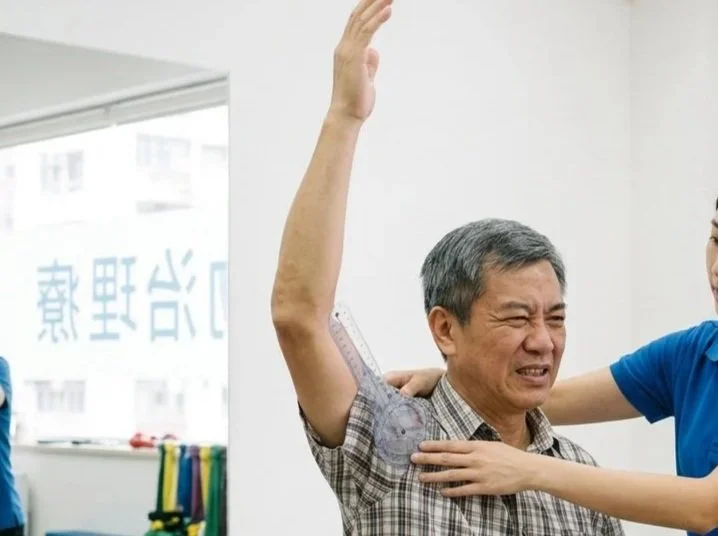
Care is individualized based on your exam findings, goals, and comfort level. A typical plan may include:
1) Pain relief and restoring motion
Hands-on care may help reduce protective tension and improve comfortable range of motion.
2) Joint and soft-tissue care (when appropriate)
This may include mobilisation/manipulation and targeted soft-tissue techniques to the shoulder region, upper back, ribs, and/or neck—only if it matches your presentation and with your consent.
3) Strength and control (the long-term fix)
You’ll get a clear progression to improve:
Rotator cuff strength
Shoulder blade control
Upper-back mobility/strength
Load tolerance for the tasks you do (work, sport, gym, parentin
4) Practical modifications (so you don’t keep re-flaring it)
Guidance on:
Sleep positions and pillow support
Desk setup and break strategy
Training modifications (temporary, targeted—without “stopping everything”)
Return-to-lifting or return-to-sport steps
Book an Appointment
We’ll assess your shoulder, identify the primary driver(s) of pain, and build a plan to get you back to strong, comfortable movement.