
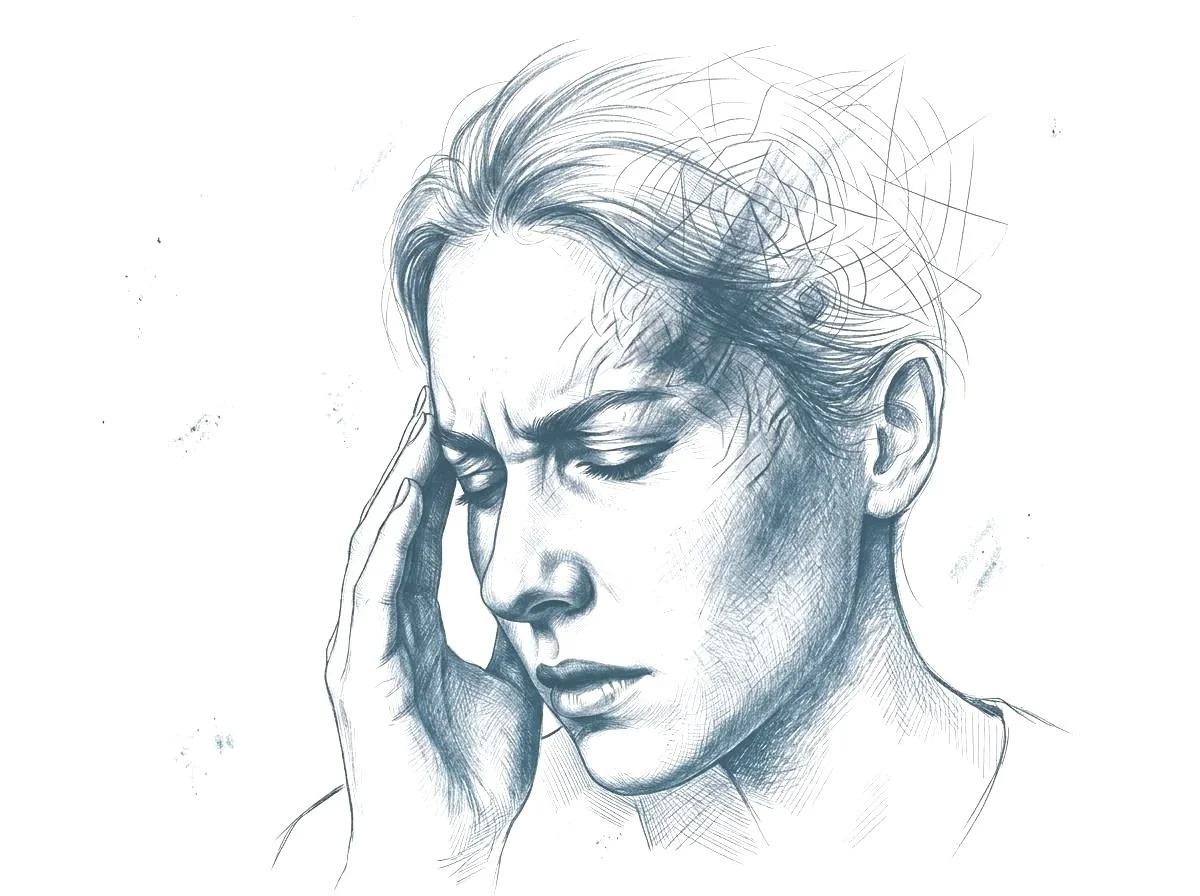
Headaches
What are Neck/Posture-Related Headaches?
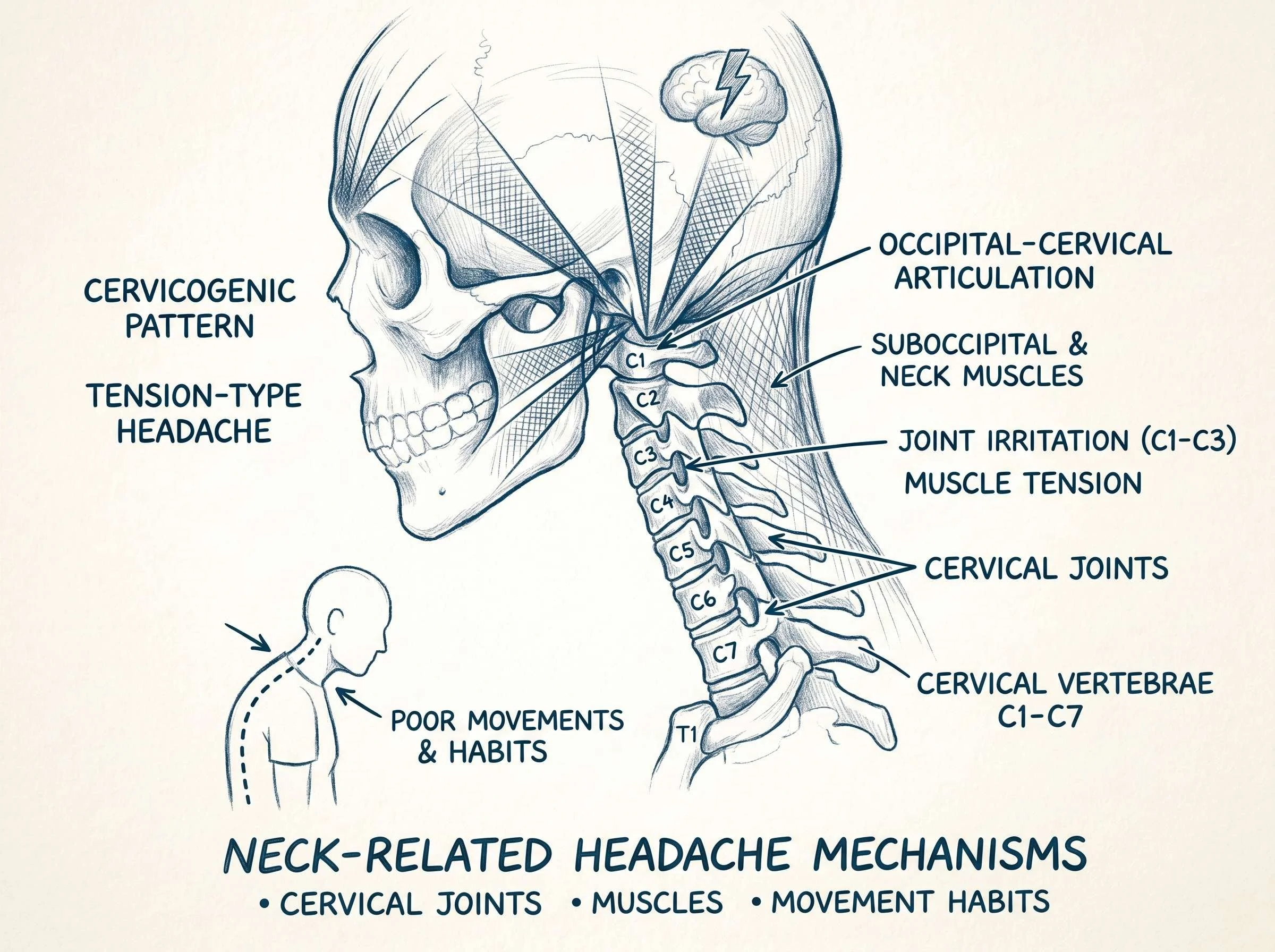
Neck/posture-related headaches (often called cervicogenic or tension-type patterns) are headaches where the neck joints, muscles, and movement habits play a major role in triggering or maintaining symptoms.
They often build up after long desk days, driving, stress, poor sleep, or sustained forward-head posture—and can feel like a “headache that starts in the neck.”
The most important first step is identifying your specific pattern (what triggers it, what eases it, and what movements/positions are involved) so we can choose the right plan and the right pace back to normal activity.
Headaches (Most Common)
When people say “headaches,” they can mean many different types. This page focuses on headaches that are closely linked to neck tension, posture, and sustained positions.
These are extremely common—especially with desk work, travel, busy seasons, and training/lifestyle changes. The key takeaway is simple: you’re not alone, and most cases are manageable with the right plan.
What Neck/Posture-Related Headaches Can Feel Like
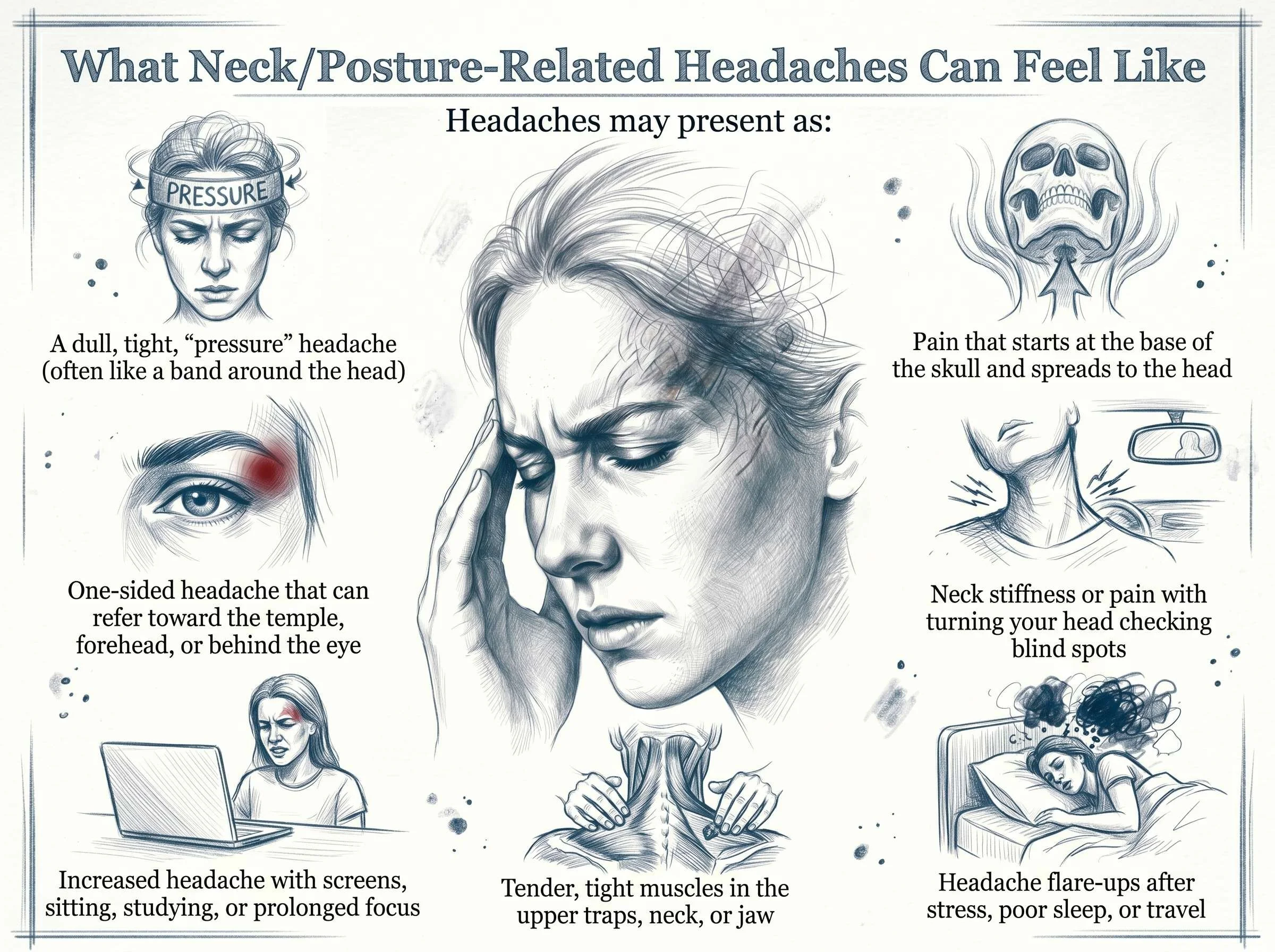
Headaches may present as:
A dull, tight, “pressure” headache (often like a band around the head)
Pain that starts at the base of the skull and spreads to the head
One-sided headache that can refer toward the temple, forehead, or behind the eye
Neck stiffness or pain with turning your head (driving, checking blind spots)
Increased headache with screens, sitting, studying, or prolonged focus
Tender, tight muscles in the upper traps, neck, or jaw
Headache flare-ups after stress, poor sleep, or travel
If you also have neurological symptoms (numbness/tingling, weakness, facial droop, slurred speech, severe dizziness, fainting) or your headache pattern is suddenly different for you, that doesn’t automatically mean something serious—but it does change what we assess and whether you need urgent medical evaluation.
Why These Headaches Happen?
Most neck/posture-related headaches are mechanical, meaning they relate to how the joints, muscles, and connective tissues are tolerating load, stress, and sustained positions.
Common contributors include:
Long desk days with limited movement variety

Forward-head posture / rounded shoulders (tolerance issue)

Muscle tension / trigger points (neck, traps, suboccipitals)
Stress, fatigue, or poor sleep
Neck & upper-back joint stiffness

Because many structures can refer pain in similar ways, the “exact cause” isn’t always obvious without a proper exam. If needed, we can advise whether imaging or referral is appropriate.

How Chiropractic Care Can Help Neck/Posture-Related Headaches
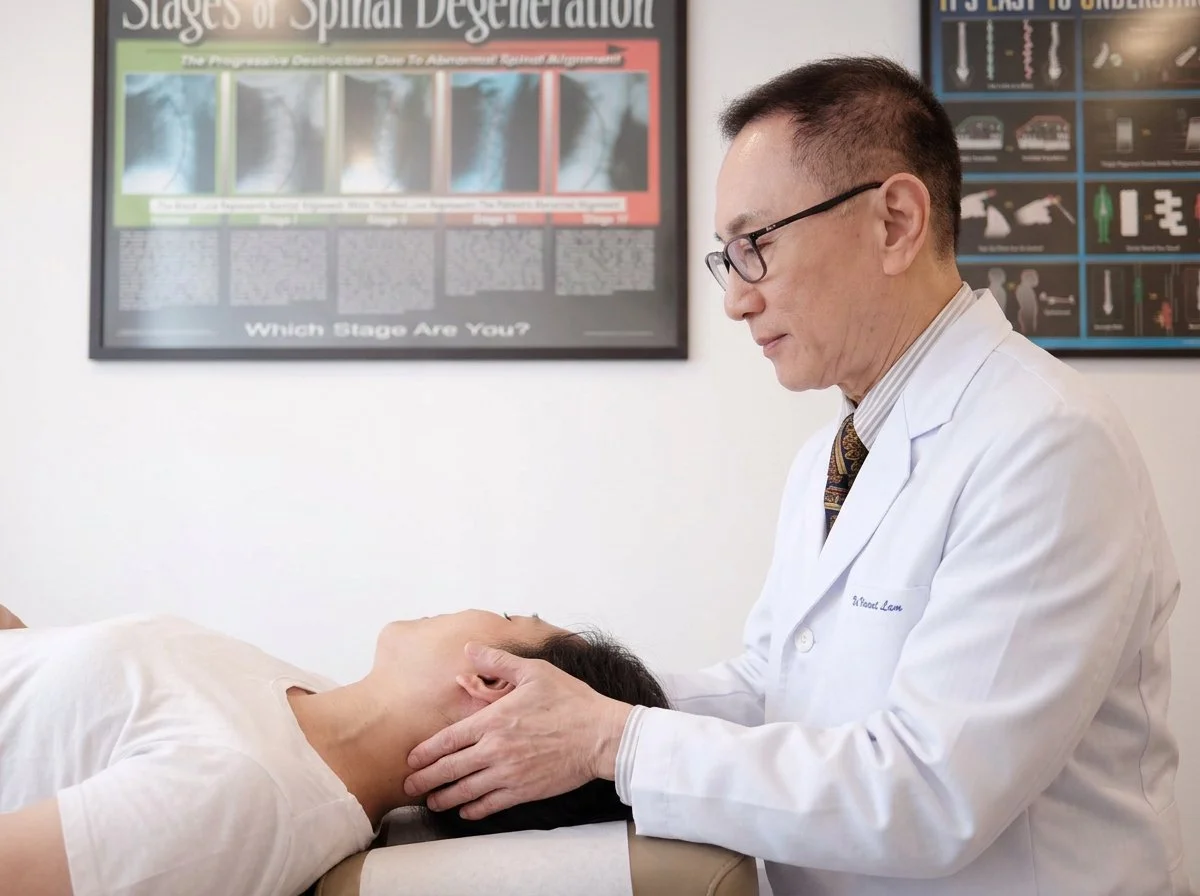
Chiropractic care aims to reduce pain and stiffness, restore comfortable movement, and support a steady return to normal activities. Our approach typically focuses on:
1) Reducing pain / breaking the pain cycle
As pain settles, protective muscle tension often reduces and daily movement becomes easier.
2) Restoring movement and joint mechanics
When appropriate and with consent, this may include chiropractic mobilisation/manipulation and other hands-on techniques to help normalize movement.
3) Improving flexibility, strength, and tolerance
We’ll guide you through simple, targeted work to build capacity in the neck, upper back, and shoulders—so you can handle desks, driving, lifting, and stress better.
4) Lifestyle and ergonomics support
Small changes—screen height, chair setup, break strategy—often make a big difference.
Book an Appointment
Not sure what’s causing your headaches? We’ll assess your symptoms, identify your pattern, and recommend the right plan.