
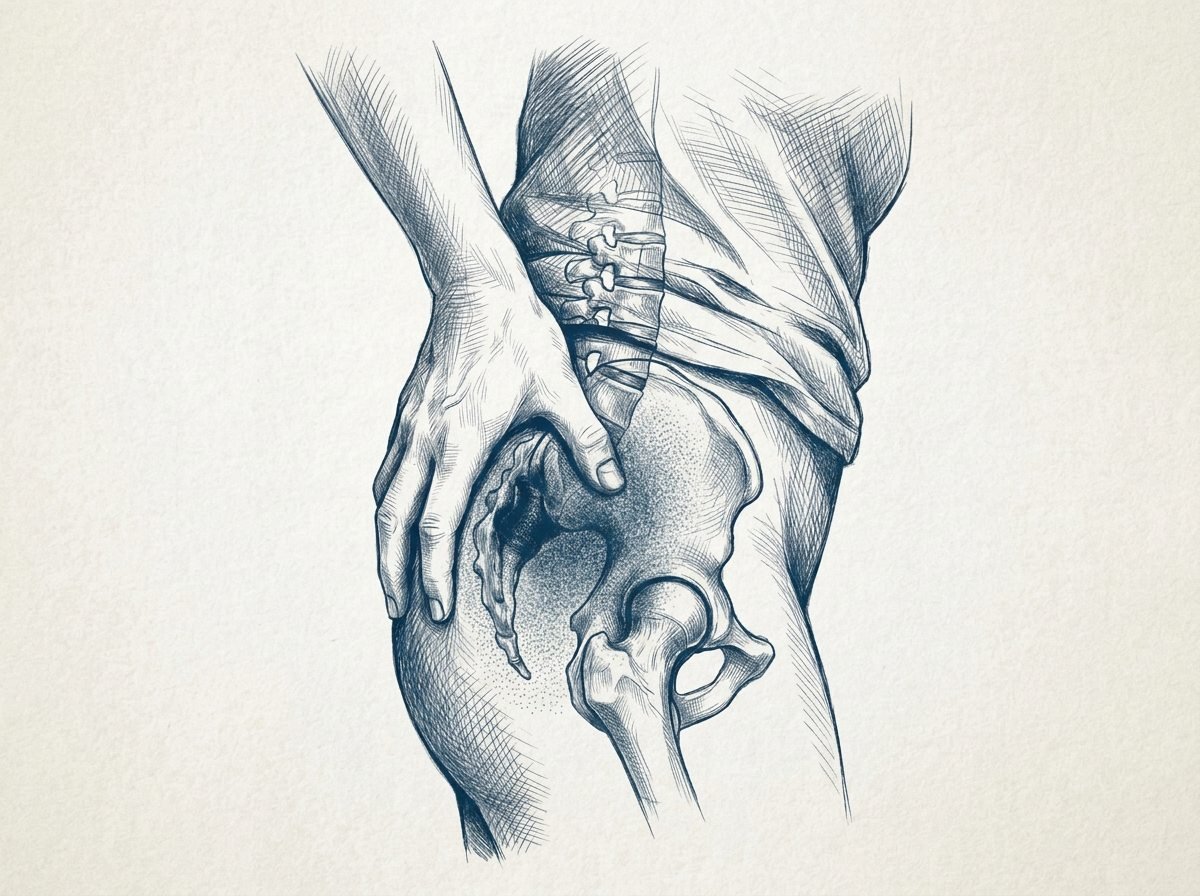
Hip Pain
What is Hip Pain?
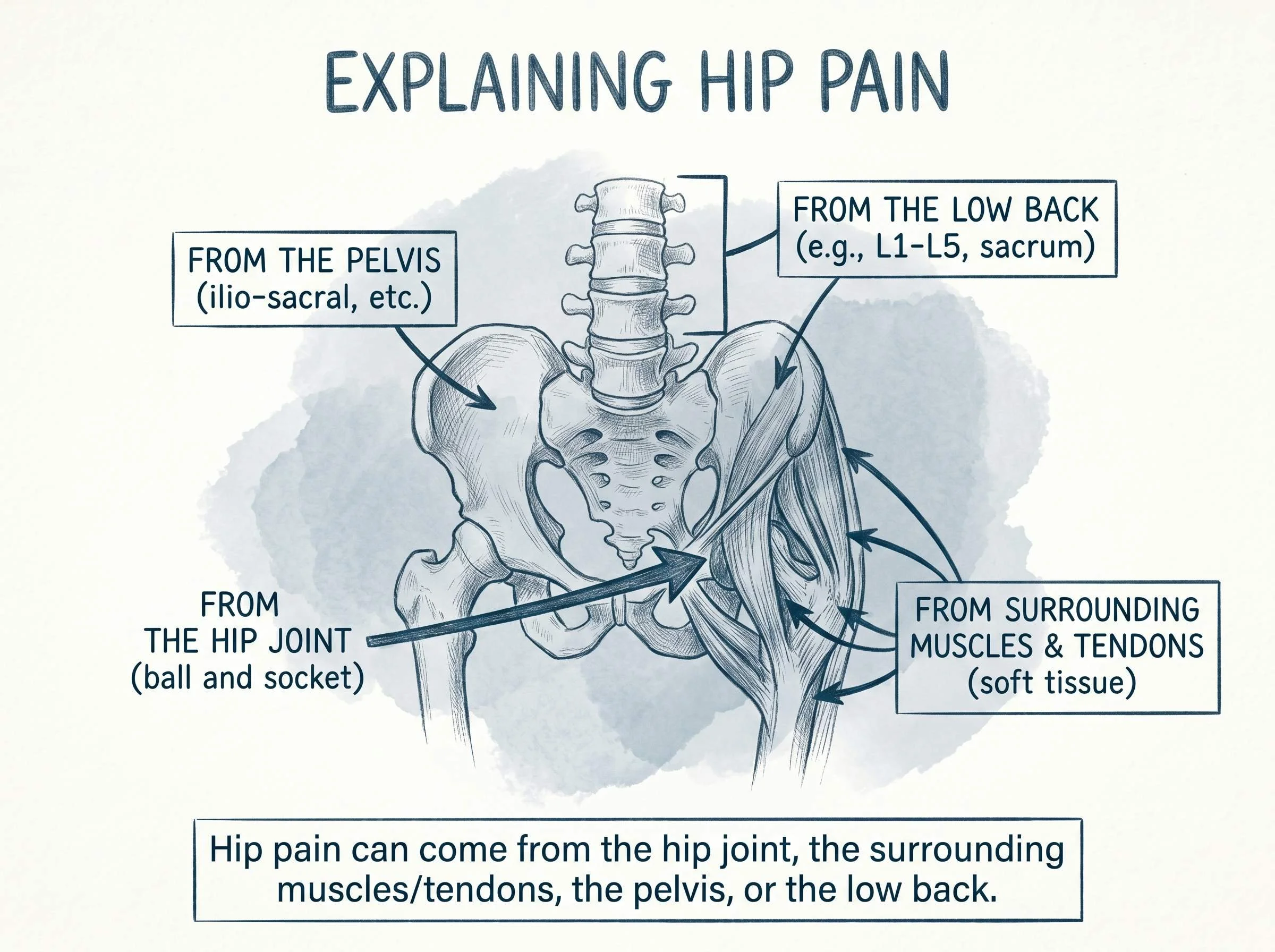
Hip pain can come from the hip joint, the surrounding muscles/tendons, the pelvis, or the low back. People describe hip pain in different areas—front of the hip/groin, side of the hip, buttock, or upper thigh—and the location can help narrow down what’s contributing.
The most helpful first step is identifying your pattern (what movements or positions trigger it, what eases it, and where you feel it), so we can match care and exercises to your goals.
Hip Pain (Most Common)
Many cases of hip pain are related to load tolerance—how well the hip and surrounding tissues are handling walking, standing, stairs, running, lifting, or prolonged sitting.
The goal is to reduce irritation, restore comfortable movement, and steadily rebuild capacity so you can get back to daily life, training, or sport without constant flare-ups.
What Hip Pain Can Feel Like
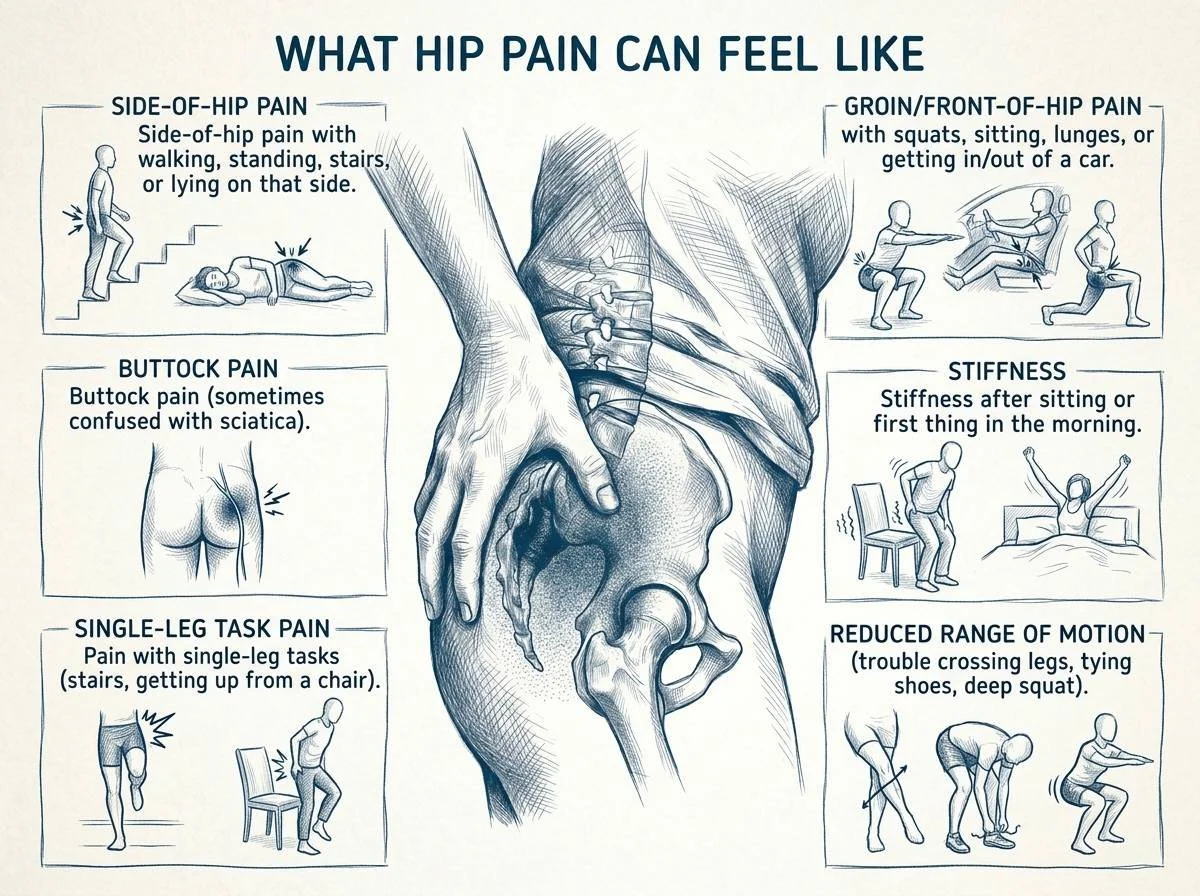
Hip pain may present as:
Side-of-hip pain with walking, standing, stairs, or lying on that side
Groin/front-of-hip pain with squats, sitting, lunges, or getting in/out of a car
Buttock pain (sometimes confused with sciatica)
Stiffness after sitting or first thing in the morning
Pain with single-leg tasks (stairs, getting up from a chair)
Reduced range of motion (trouble crossing legs, tying shoes, deep squat)
Get assessed promptly if you have severe pain after a fall/trauma, can’t bear weight, have a fever with new hip pain, or have significant unexplained swelling/redness.
Why Hip Pain Happens?
Most cases relate to how the hip joint, surrounding tendons/muscles, and the low back/pelvis are tolerating load and movement.
Common contributors include:
Gluteal tendon irritation (often side-of-hip pain)
Hip flexor or adductor overload (often front/groin or inner-thigh pain)
Reduced hip mobility increasing strain with daily activity or training

Lower back/pelvic mechanics referring pain into the hip region
Rapid increases in walking, running, lifting, or sport volume

Because several structures can refer pain in similar ways, the “exact cause” isn’t always obvious without a proper exam. If needed, we can advise whether imaging or referral is appropriate.
How Chiropractic Care Can Help Hip Pain


Care is individualized based on your exam findings, goals, and comfort level. A typical plan may include:
1) Pain relief and restoring motion
Hands-on care may help reduce protective tension and improve comfortable range of motion.
2) Improving mechanics (hip + low back/pelvis)
When appropriate and with consent, this may include mobilisation/manipulation and soft-tissue techniques.
3) Strength and tolerance plan
A clear progression to build capacity in:
Glutes/hip stabilizers
Hip flexors/adductors (as needed)
Trunk control for better transfer of load
4) Practical modifications
Guidance for:
Sitting, stairs, walking volume, and training adjustments
Sleep positions (especially for side-of-hip pain)
Gradual return to running, lifting, or sport
Book an Appointment
We’ll identify the likely driver(s) of your hip pain and build a clear plan to get you moving comfortably again.